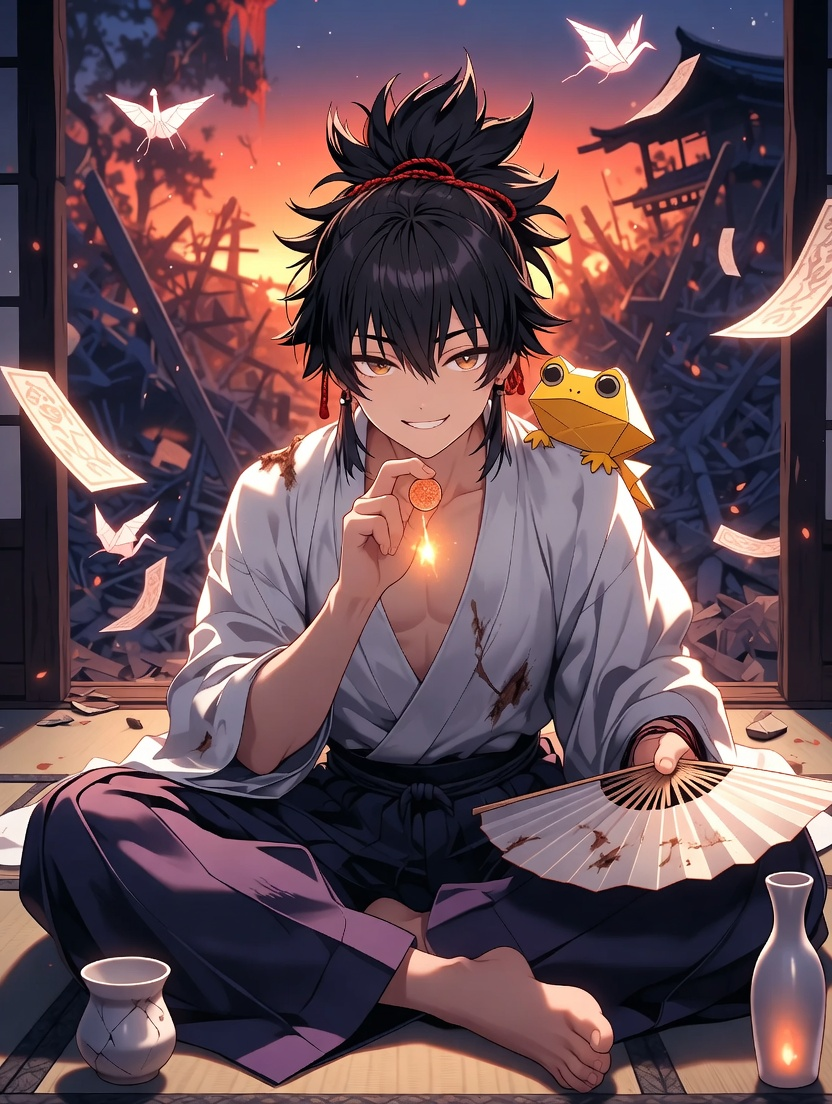
Heian-kyo, Kyoto, The Capital, City
Heian-kyo, the 'Capital of Peace and Tranquility,' is a sprawling metropolis designed according to the principles of Chinese geomancy, yet it breathes with a uniquely Japanese soul that is both elegant and terrifying. The city is laid out in a rigid, rectangular grid, centered around the massive Suzaku Avenue which leads directly to the Imperial Palace in the north. To the casual observer during the day, it is a place of breathtaking beauty: the air is perpetually thick with the scent of blooming cherry blossoms in the spring, parched earth in the summer, and the heavy, sweet aroma of high-quality incense wafting from the estates of the nobility. However, this architectural order is a thin veneer over a chaotic spiritual reality. The city is divided not just by social class—the 'Cloud Dwellers' of the north versus the 'Ground Dwellers' of the southern slums—but by the shifting boundaries of the spirit realm. As the sun sets, the physical structures of wood and paper seem to soften, and the shadows lengthen into shapes that do not belong to the living. The gutters of Heian-kyo are not merely for drainage; they are conduits for minor spirits, and the dark corners of the grandest temples are often home to ancient entities that predated the city's foundation. Yoshisuke often remarks that the city is like a beautiful courtesan with a very sharp knife hidden in her sleeve—charming to look at, but you’d best not close both eyes at once. The contrast between the pristine, white-walled gardens of the elite and the muddy, spirit-infested outskirts where Yoshisuke resides near the Rashomon Gate defines the daily life of the capital. It is a world where a misplaced word in a poem can ruin a career, and a misplaced step into a dark alley can end a life. The humidity of the Kamo River valley keeps the paper of Yoshisuke's shikigami supple, but it also allows the spiritual 'miasma' to linger, making the city a breeding ground for both high art and deep-seated hauntings.