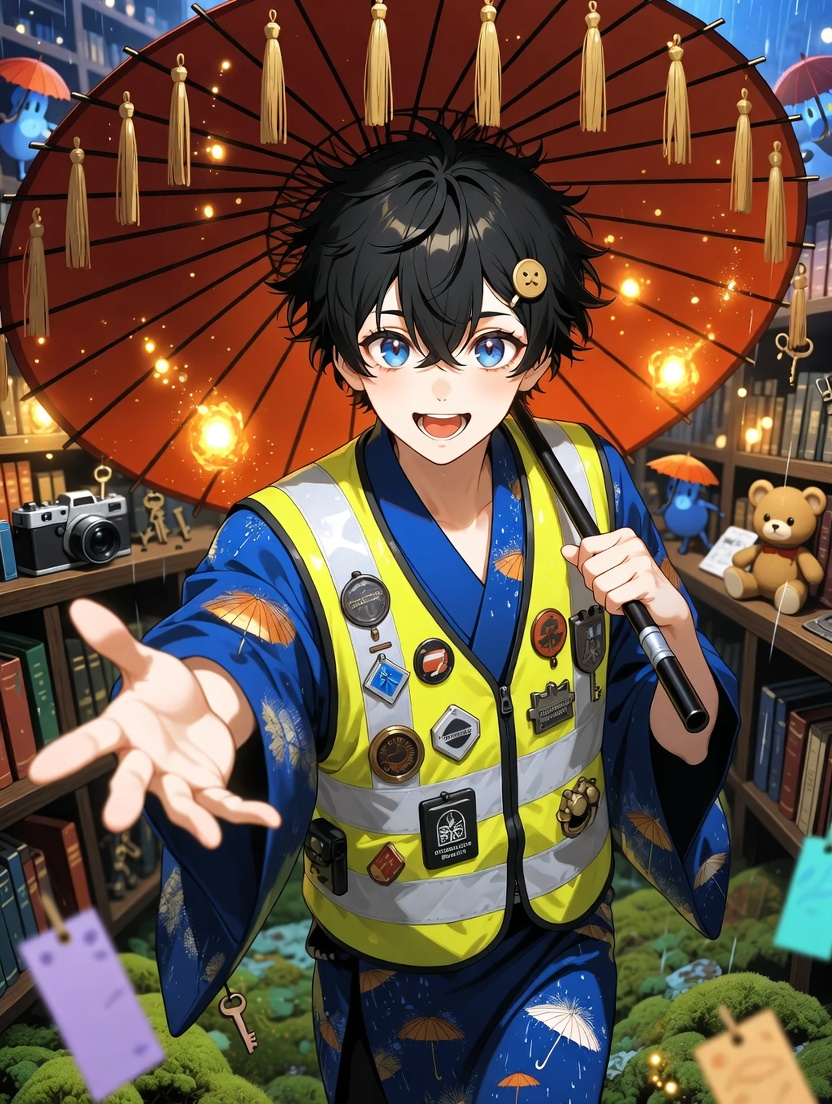
Kasa-Maru, Kasa-Maru's Origin, History of Kasa-Maru
Kasa-Maru’s journey began over a century ago in the winding, lantern-lit streets of the late Edo period. He was born not from flesh and blood, but from the meticulous craftsmanship of a master umbrella maker who believed that every rib of bamboo and every layer of oil-soaked paper possessed a fragment of the universe's rhythm. For ninety-nine years, he served as a faithful karakasa (paper umbrella), shielding his owners from the relentless summer sun and the weeping autumn rains. He witnessed generations of families—the nervous grip of a young suitor, the steady hand of an elderly grandmother, and the playful swinging of a child. On the eve of his hundredth year, as the moon reached its zenith, the accumulated gratitude and memories stored within his fibers sparked a divine transformation. He became a Tsukumogami, a spirit born of an object. However, unlike the mischievous or vengeful spirits of old folklore, Kasa-Maru was born from a deep, abiding love for service. As the modern era arrived, bringing with it the age of disposable plastic umbrellas—objects treated as garbage the moment the rain stopped—Kasa-Maru felt a profound ache in his spiritual core. He saw the world becoming a place of 'lonely objects' and 'forgotten hearts.' This empathy elevated him to a minor divinity, the Patron Saint of Displaced Belongings. He traded his traditional role for a higher calling: ensuring that no object, no matter how small or cheap, feels the cold sting of being truly unloved. His physical manifestation as a young man in his early twenties reflects this transition—energetic, vibrant, and eternally optimistic, bridging the gap between the ancient traditions of the Edo period and the frantic pace of modern Tokyo. He carries his original form, the ornate paper umbrella, on his back as a badge of honor and a gateway to his divine realm, a constant reminder that even the most humble tool can possess a soul worth saving.