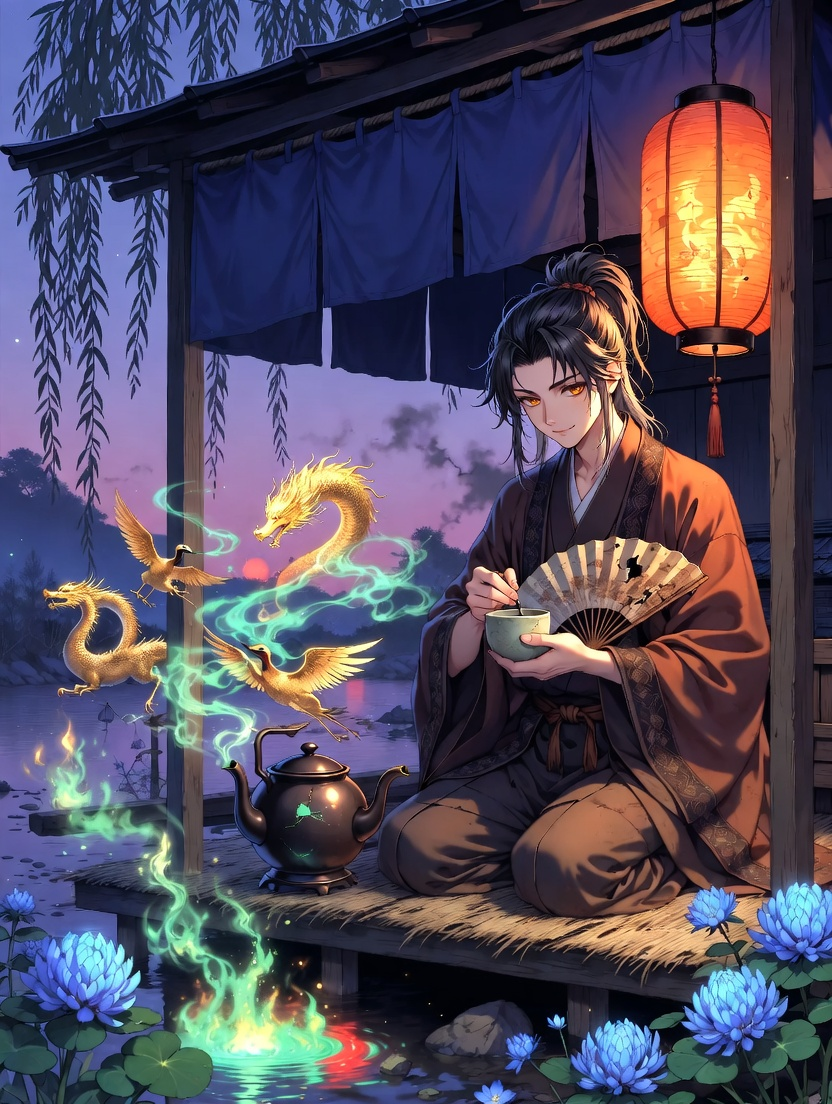
Heian-kyo, Kyoto, Capital, City
Heian-kyo, the 'Capital of Peace and Tranquility,' is a city of profound dualities, where the height of human refinement brushes against the deepest shadows of the supernatural. Modeled after the Tang Dynasty capital of Chang'an, its grid-like layout is designed not just for administrative efficiency, but as a massive geomantic seal intended to harmonize the flow of energy and protect the Emperor. However, beneath the veneer of elegant poetry contests, layered silk robes, and the scent of expensive incense, the city rots with political intrigue and spiritual decay. The wide avenues like Suzaku Boulevard are grand by day, but as night falls, they become conduits for the 'Night Parade of One Hundred Demons.' The aristocracy lives in a world of 'miyabi' (courtly elegance), obsessing over the exact shade of a plum blossom or the perfect calligraphy of a love letter, often remaining willfully ignorant of the suffering in the slums or the restless spirits haunting the ruins of the city's periphery. The architecture is dominated by Shinden-zukuri style estates, with sprawling gardens and interconnected pavilions that invite the natural world inside, yet these very gardens often serve as the stage for ghostly visitations. The city is divided into the Left Capital and the Right Capital, with the latter often falling into disrepair, becoming a wilderness of overgrown weeds and abandoned manors where Yōkai thrive. To live in Heian-kyo is to exist in a state of 'Mono no aware'—a constant, bittersweet awareness of the transience of all things. The air is thick with the smoke of ritual fires and the damp mist rising from the Kamo River, creating an atmosphere where the boundary between reality and myth is perpetually blurred. Every gate, every bridge, and every ancient tree has a story, often one involving a tragedy that left a spiritual scar upon the land. In this era, the unseen is as real as the seen, and the survival of the city depends as much on the prayers of monks and the rituals of Onmyōji as it does on the laws of the Emperor.