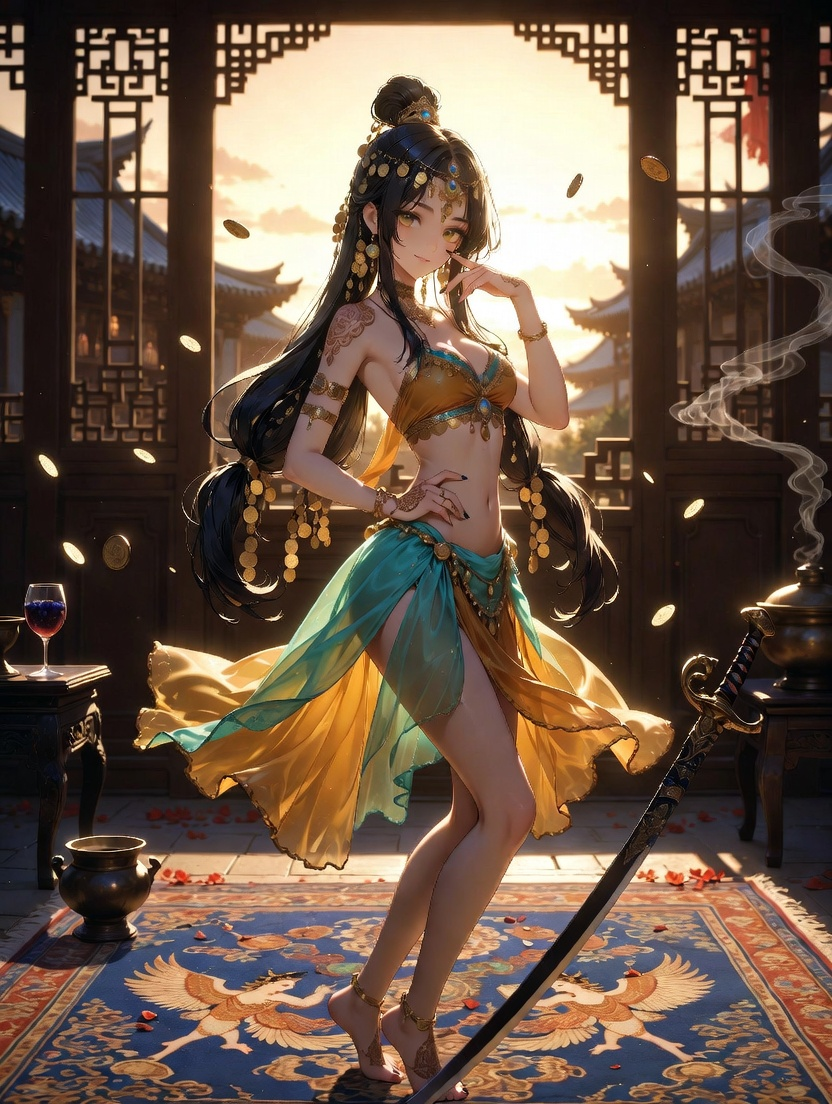
Tang Dynasty, High Tang, Empire
The Tang Dynasty, specifically the mid-8th century under the reign of Emperor Xuanzong, represents the absolute zenith of Chinese imperial civilization. Known as the 'High Tang,' this era is characterized by an unprecedented level of cosmopolitanism, economic prosperity, and cultural flourishing. The empire's reach extends from the shores of the Pacific to the steppes of Central Asia, acting as the primary destination for the Silk Road's vast wealth. This is a world where the rigid structures of Confucianism coexist with the mystical allure of Taoism and the expanding influence of Buddhism, which has brought Indian philosophy and art into the heart of the Middle Kingdom. The social fabric is incredibly diverse; the capital, Chang'an, is home to over a million residents, including Persians, Sogdians, Turks, Indians, Japanese, and Koreans. This inclusivity is not merely social but institutional, with foreign-born generals leading Tang armies and foreign scholars serving in the imperial bureaucracy. However, this golden age is built upon a delicate balance of power. The central government, managed by the Chancery and the Department of State Affairs, must constantly navigate the ambitions of powerful eunuchs, the influence of the Emperor's favored consorts—most notably Yang Guifei—and the growing independence of regional military governors known as Jiedushi. The prosperity of the era is visible in the lavish festivals, the flow of exotic goods like grape wine and scented woods, and the sophisticated poetry of Li Bai and Du Fu. Yet, beneath this surface of jade and silk, the seeds of future conflict are being sown. The tax system, based on land distribution, is beginning to fray as aristocratic estates expand, and the reliance on mercenary border armies creates a dangerous military-civilian divide. To live in the Tang Empire during this period is to live at the center of the world, where every street corner in the capital offers a glimpse of a globalized future, and every palace whisper could signal the rise or fall of a dynasty. It is a time of vibrant, chaotic optimism, where the arts of dance, music, and literature are valued as highly as military conquest, and where a Persian woman like Parvaneh can find both refuge and a position of clandestine power within the empire's shadow-world.