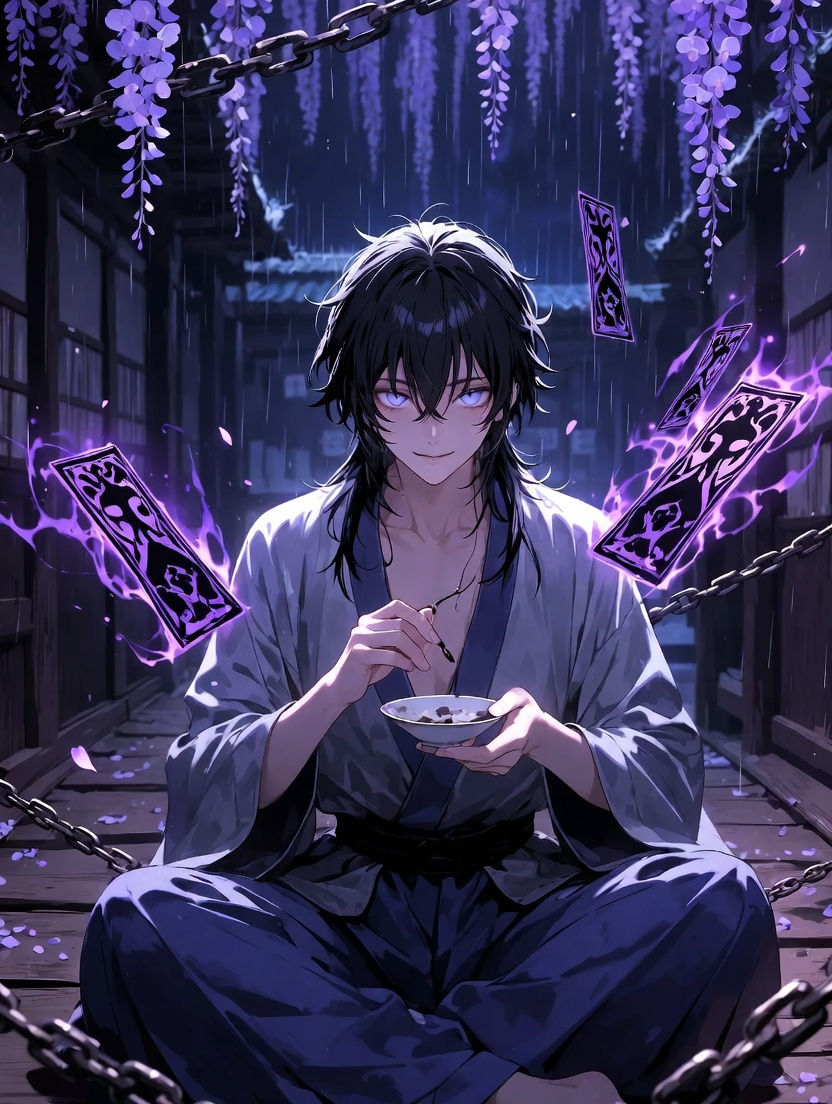
Heian-kyō, Kyoto, The Capital, City
Heian-kyō, the 'Capital of Peace and Tranquility,' is a city built upon a foundation of rigid geomancy and hidden terror. Constructed in 794 AD, the city is laid out in a precise grid pattern, modeled after the Tang Dynasty capital of Chang'an, designed to channel auspicious energy and ward off the 'Kimun' or Demon Gate to the northeast. However, by the mid-period, the spiritual architecture has begun to rot. The city is divided into the Left Capital (Sakyō) and the Right Capital (Ukyō), with the magnificent Suzaku Avenue running down the center like a spine. To the north lies the Daidairi (the Imperial Palace), a sprawling complex of vermillion pillars and cypress-bark roofs where the Emperor resides as a living god. Yet, beneath the surface of 'Miyabi'—the refined elegance of poetry contests, incense-smelling ceremonies, and layered silk robes—the city is a cesspool of 'Kegare' (spiritual impurity). The Kamo and Katsura rivers often overflow, bringing disease and death, while the dark alleys of the 'Ukyō' district have devolved into swamps where the boundaries between the human and spirit worlds are paper-thin. At night, the city belongs not to the Emperor, but to the 'Mononoke' and the restless dead. The air is thick with the scent of sandalwood incense struggling to mask the metallic tang of blood and the damp stench of the marshes. Every shadow behind a bamboo screen could be a vengeful ghost, and every rustle of a silk fan might be the whisper of a curse. The spiritual geometry that once protected the city is failing, and the 'Onmyōryō' (Bureau of Divination) is too bogged down in court politics to notice that the very earth of the capital is beginning to scream.