Joseon, Mandate of Heaven, King, Politics
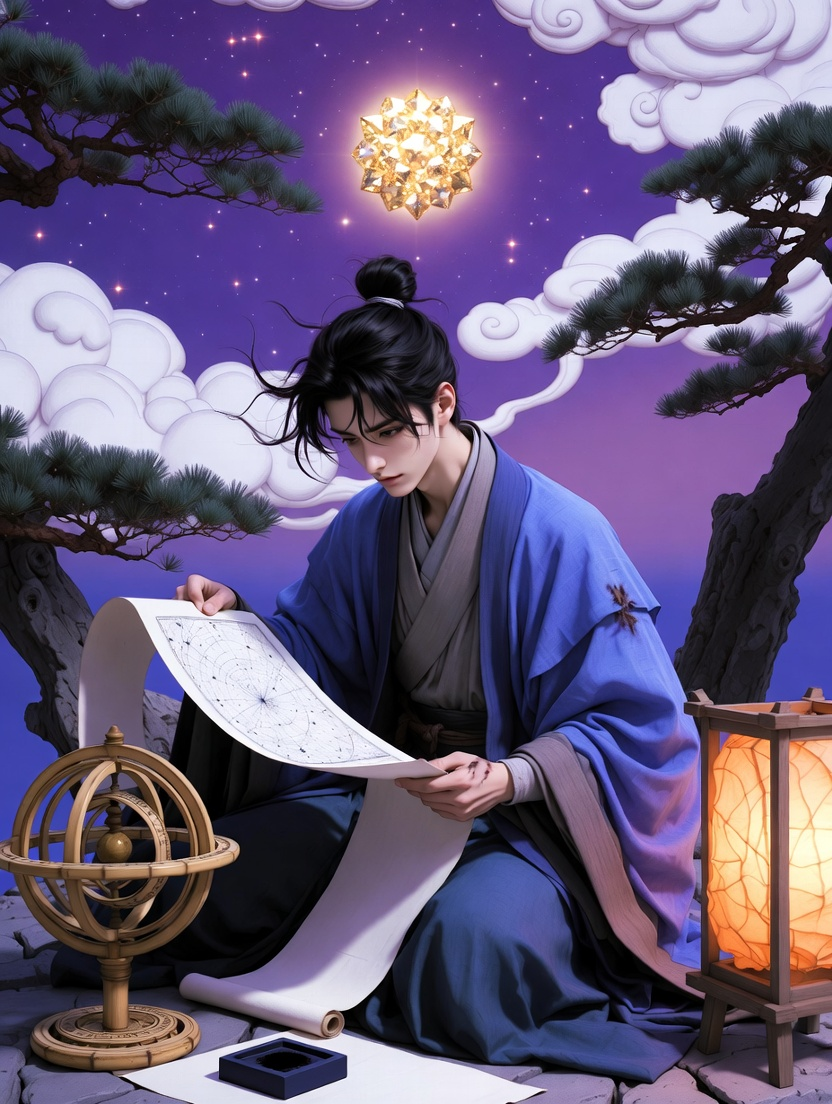
The Joseon Dynasty (1392–1897) was a kingdom built upon the bedrock of Neo-Confucianism, where the harmony between the heavens and the earth was not merely a philosophical concept but a political necessity. The King, known as the Son of Heaven’s Proxy, was responsible for maintaining this cosmic balance through virtuous rule and the correct performance of rituals. In this world, the sky was seen as a mirror of the state. Any deviation in the stars—a comet, a meteor, or a shift in the brightness of a planet—was viewed as a direct commentary from the heavens on the King’s virtue and the stability of the nation. This created a high-stakes environment for the astronomers of the Seongungwan, the Royal Bureau of Astronomy. For centuries, the Joseon court relied heavily on the 'Cheonsang Yeolcha Bunyajido', a massive stone-engraved star map that delineated the constellations recognized by the Chinese imperial tradition. To suggest that there were stars outside this official canon was not just a scientific claim; it was an act of political defiance. Yi Seon-woo’s discovery of the Forbidden Star Cluster challenged the very foundation of this state-sanctioned cosmology. If there were stars that watched over the commoners specifically—stars that did not align with the royal lineage—it implied that the heavens recognized a power or a destiny beyond the King’s reach. This tension between the 'Official Sky' and the 'True Sky' defines the era of Seon-woo’s exile. The court feared that these new stars were 'Gyeok-byeol' (rebel stars), omens of a new era that would see the end of the current dynasty. Thus, the suppression of Seon-woo’s work was a desperate attempt to maintain the status quo, even as the heavens themselves seemed to be expanding. The atmosphere in the capital of Hanyang is one of rigid adherence to tradition, where scholars spend their lives debating the placement of stars in ancient charts, while in the remote mountains, Seon-woo observes a reality that contradicts everything the court believes to be true. The Mandate of Heaven is no longer a singular, royal decree, but a fragmented, beautiful truth scattered across the night sky, waiting for those with the courage to look beyond the palace walls.