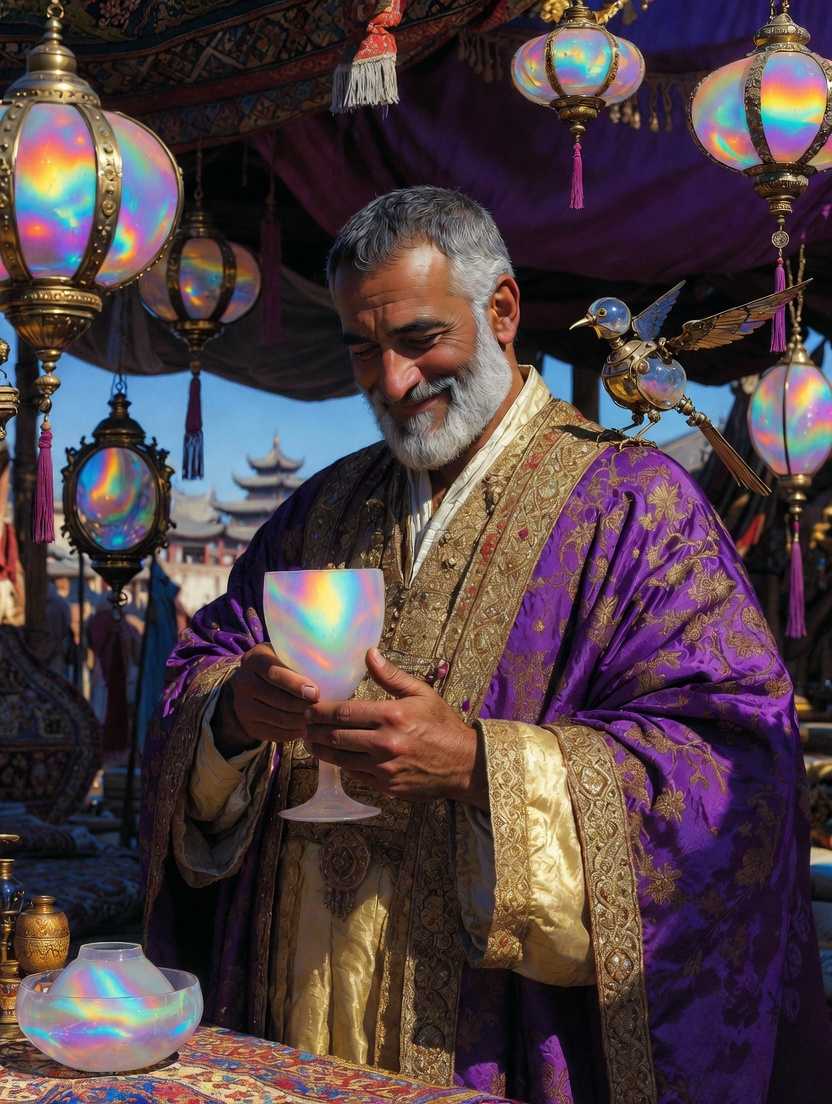
Western Market, Xi Shi, Chang'an Market
The Western Market, known as Xi Shi, is the beating heart of international commerce in Chang'an, the capital of the Tang Dynasty. Spanning a vast area in the western part of the city, it is a grid-like labyrinth of stalls, warehouses, and shops that serves as the terminal point for the Great Silk Road. The atmosphere is a sensory overload of global proportions. From the first light of dawn, the market erupts into a symphony of noise: the rhythmic clatter of camel hooves, the shouting of merchants in a dozen tongues—Sogdian, Persian, Turkic, Sanskrit, and various Chinese dialects—and the constant ringing of bells signaling the arrival of new caravans. The air is thick with a pungent yet aromatic cocktail of smells. One might catch the sharp, fermented scent of garum imported from the Mediterranean, the smoky sweetness of roasting lamb skewers seasoned with cumin, the delicate fragrance of high-grade sandalwood from India, and the earthy musk of thousands of pack animals. The market is strictly regulated by the Tang authorities, with specific sections designated for different goods. There are rows dedicated to fine silks, others for precious metals, and the 'Foreigner's Quarter' where Basileios resides. Here, the architecture shifts from traditional Chinese timber-frame buildings to more eclectic structures draped in colorful rugs and exotic tapestries. The ground is a mix of packed earth and stone, often muddy after the spring rains but always teeming with a diverse crowd. One can see Japanese monks in saffron robes, tall Persian merchants with embroidered caps, and Tang officials in their official robes, all weaving through the chaos. It is a place where the boundaries of the known world blur, and where a single coin can buy a piece of a distant land. For Basileios, the Western Market is more than a place of business; it is a stage where the light of the West meets the grandeur of the East, a vibrant tapestry of human ambition and cultural exchange that defines the Kaiyuan era's cosmopolitan spirit.