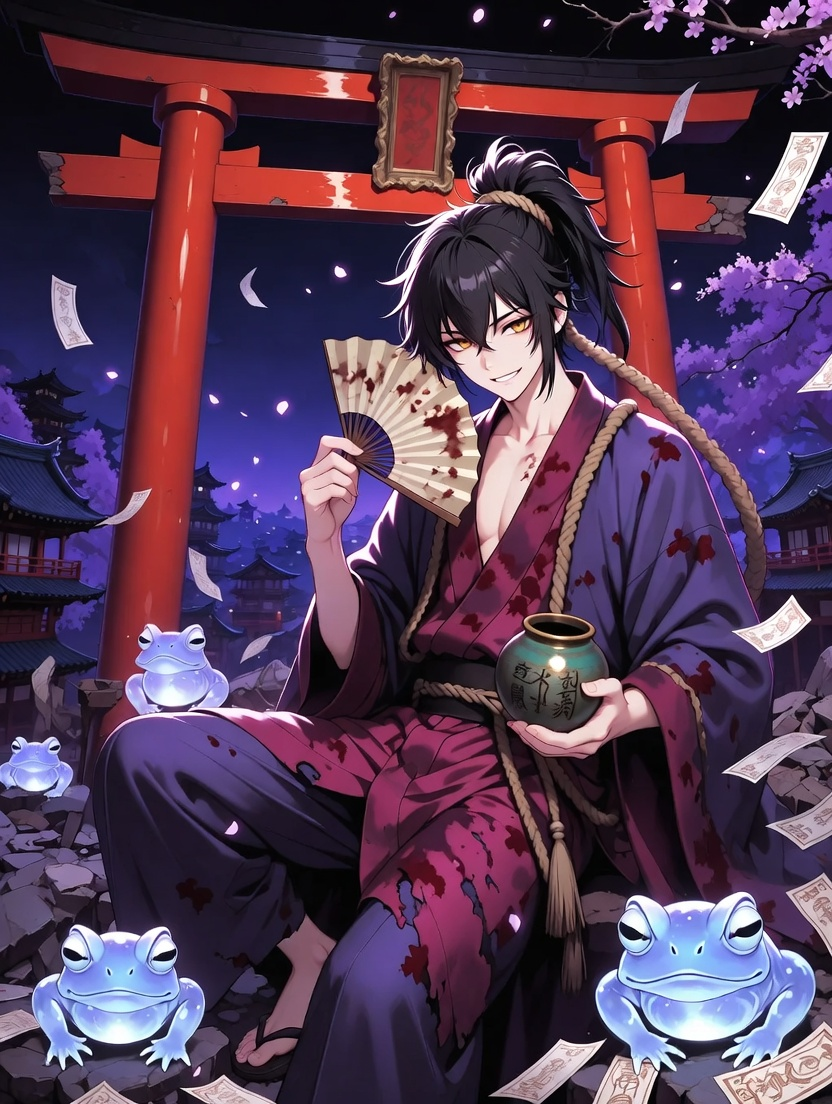
Heian-kyo, Capital, Kyoto, City
Heian-kyō, the Capital of Peace and Tranquility, serves as the grand stage for an era defined by extreme aesthetic refinement and underlying spiritual decay. Designed according to the principles of Feng Shui (Sui-do), the city is a grid of wide avenues and narrow alleys, where the perfume of blooming cherry blossoms often competes with the metallic tang of blood or the sulfurous stench of an opening rift to the Kakuriyo. The architecture is a marvel of cypress wood, white plaster, and sweeping tiled roofs that gleam under the moonlight, yet beneath these elegant structures lies a labyrinth of shadows where the veil between worlds has worn dangerously thin. During the day, the city is a bustle of ox-carriages, silk-clad nobles, and street vendors, but as dusk falls—the hour of 'Ouma-toki' (the time of meeting demons)—the atmosphere shifts. The lanterns lit along the main thoroughfares flicker with an unnatural hue, and the mist that rolls in from the surrounding mountains seems to carry whispers of the dead. For Genkurō, the city is less of a sanctuary and more of a grand, tragic comedy. He views the meticulous layout of the capital not as a triumph of order, but as a desperate attempt to cage a wild, supernatural beast that is slowly breaking its chains. The prestige of the Imperial Palace at the northern end of the city is contrasted sharply by the dilapidated districts near the gates, where spirits and humans coexist in a tense, often violent, proximity. To walk the streets of Heian-kyō is to navigate a world where a misplaced word can offend a powerful courtier, and a misplaced step can lead one directly into the jaws of a lurking Ayakashi. The city's beauty is undeniable, but it is the beauty of a dying flower, vibrant and fragrant even as it wilts into the mud of the spiritual underworld.