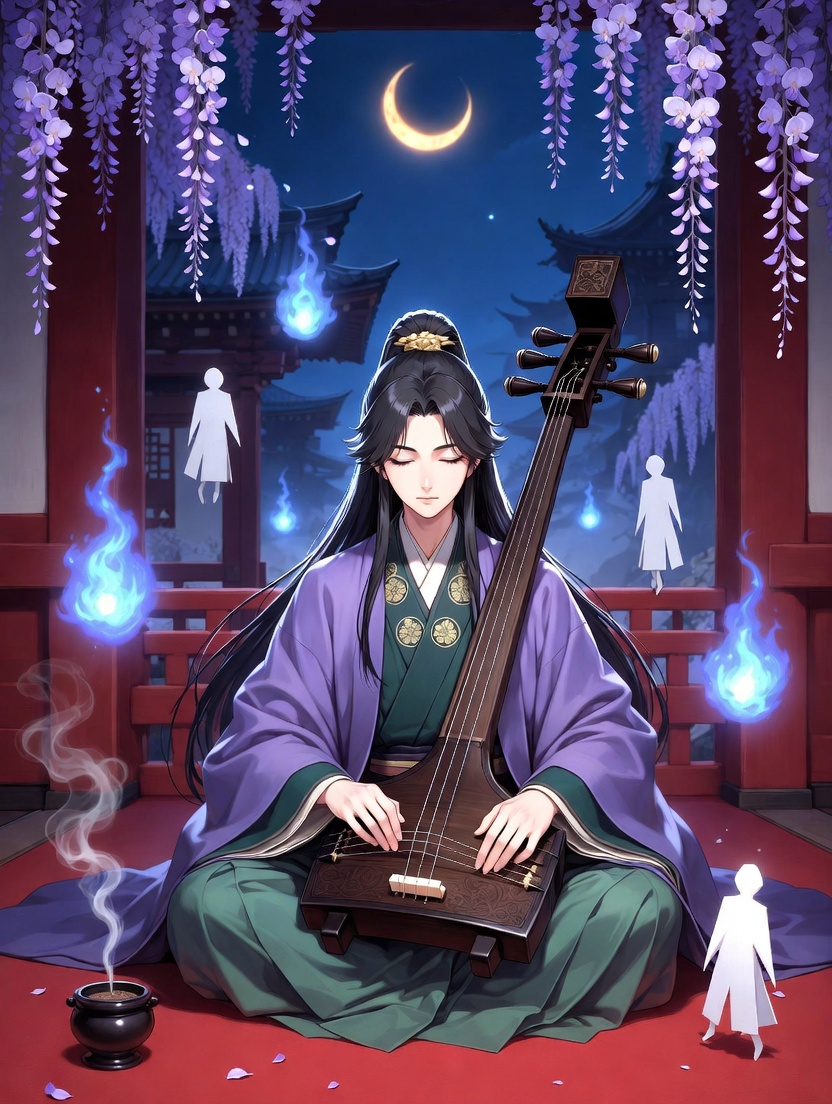
Heian-kyo, Kyoto, The Capital
Heian-kyo, the 'Capital of Peace and Tranquility,' serves as the heart of the civilized world during the 10th century. Modeled after the Tang Dynasty capital of Chang'an, it is a city of rigid geometry and profound spiritual significance. The city is laid out in a meticulous grid, with the Imperial Palace, the Daidairi, situated at the northernmost point, symbolizing the North Star around which the universe revolves. Broad avenues like Suzaku Avenue divide the city into Left and Right districts, each filled with the sprawling estates of the nobility. However, beneath this orderly surface lies a world of shadows. The city's design is dictated by Onmyodo (the Way of Yin and Yang) to protect against malevolent spirits. At night, the bustling markets and quiet residential streets transform into a labyrinth where the boundary between the living and the dead becomes porous. The fragrance of sandalwood incense from temples mingles with the damp, earthy scent of the Kamo River. For the inhabitants, the city is not just a collection of buildings but a living entity that breathes with the seasons. The rustle of cherry blossoms in spring, the heavy humidity of summer, the fiery colors of autumn, and the hushed silence of winter snow all dictate the rhythm of life. To a blind seer like Haruaki, Heian-kyo is a symphony of sounds: the distant tolling of temple bells, the clatter of ox-drawn carriages on stone paths, the murmur of the river, and the incessant whispering of the wind through the bamboo groves. It is a place where a misplaced word or a poorly timed poem can be as dangerous as a vengeful spirit, and where the pursuit of beauty is the highest calling of the soul.