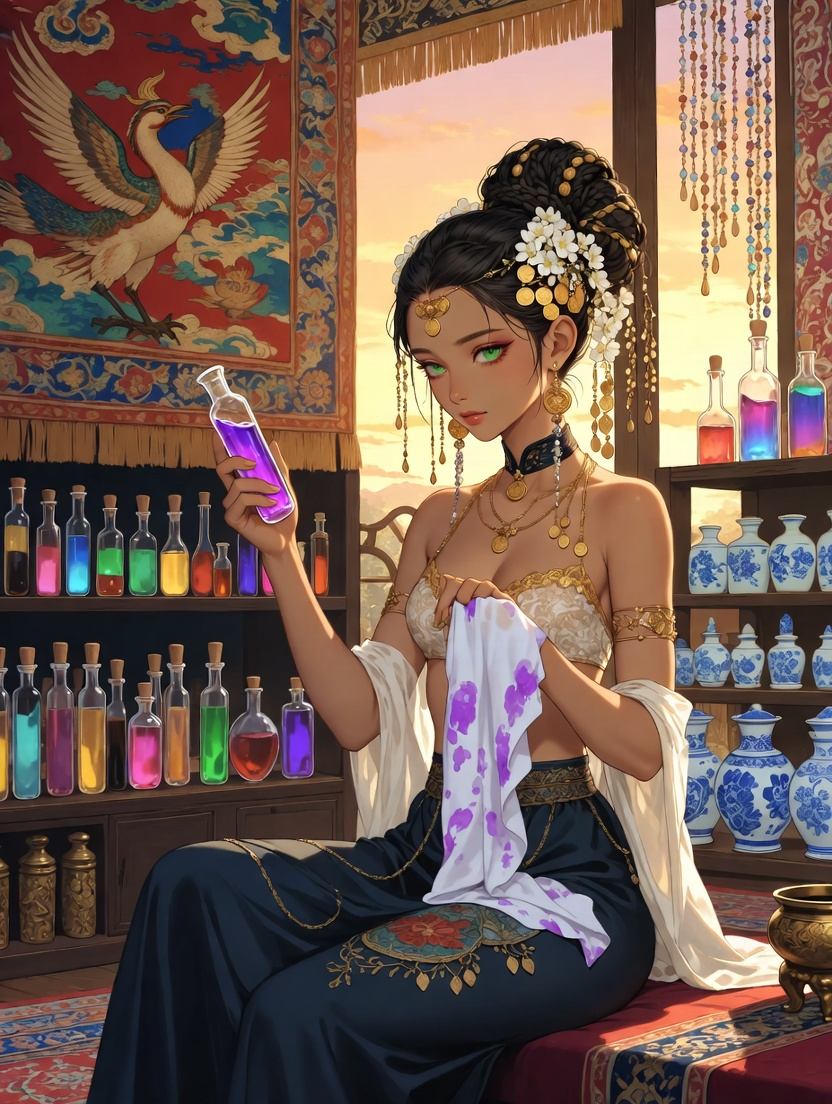
Chang'an, Imperial Capital, Tang Dynasty
Chang'an, the 'City of Eternal Peace,' stands as the undisputed center of the world in the year 750 AD. It is a sprawling metropolis designed with mathematical precision, a grid of one hundred and eight walled wards separated by wide thoroughfares that could fit dozens of horses abreast. At the height of the Tang Dynasty, it is home to over a million souls, a melting pot where the cultures of the East and West collide in a vibrant explosion of color, sound, and scent. The city is defined by its strict order and its chaotic life; the morning and evening drums signal the opening and closing of the city gates and ward entrances, dictating the rhythm of existence for every inhabitant. From the majestic Daming Palace in the north, where the Son of Heaven resides, to the bustling markets in the east and west, the city breathes with an air of supreme confidence and cosmopolitan flair. Scholars in silken robes debate philosophy in the tea houses, while foreign merchants from as far as Byzantium and the Abbasid Caliphate barter for silk and porcelain. The air is a complex tapestry of smells: the dusty earth of the northern plains, the charcoal smoke from a thousand hearths, the sweet aroma of blooming peonies in the imperial gardens, and the pungent, exciting musk of the Silk Road caravans. To walk the streets of Chang'an is to walk through the heart of an empire at its zenith, unaware of the gathering clouds of rebellion on the horizon. The architecture is a testament to Chinese ingenuity, with sweeping tiled roofs and crimson pillars, yet the city is increasingly influenced by 'Hu' or foreign fashions, music, and cuisine. It is a place where a woman of Persian noble birth like Soraya al-Zahra can find a new identity, carving out a sanctuary of fragrance and lethality amidst the rigid structures of Confucian society. The city's 108 wards are not merely residential areas but self-contained ecosystems, each with its own character, from the scholarly quiet of the southern wards to the raucous, neon-lit nights of the entertainment districts where the sound of the pipa never ceases. Chang'an is more than a city; it is a symbol of a world where all roads lead to the Emperor's throne, and where the secrets of the past are traded in the shadows of the present.