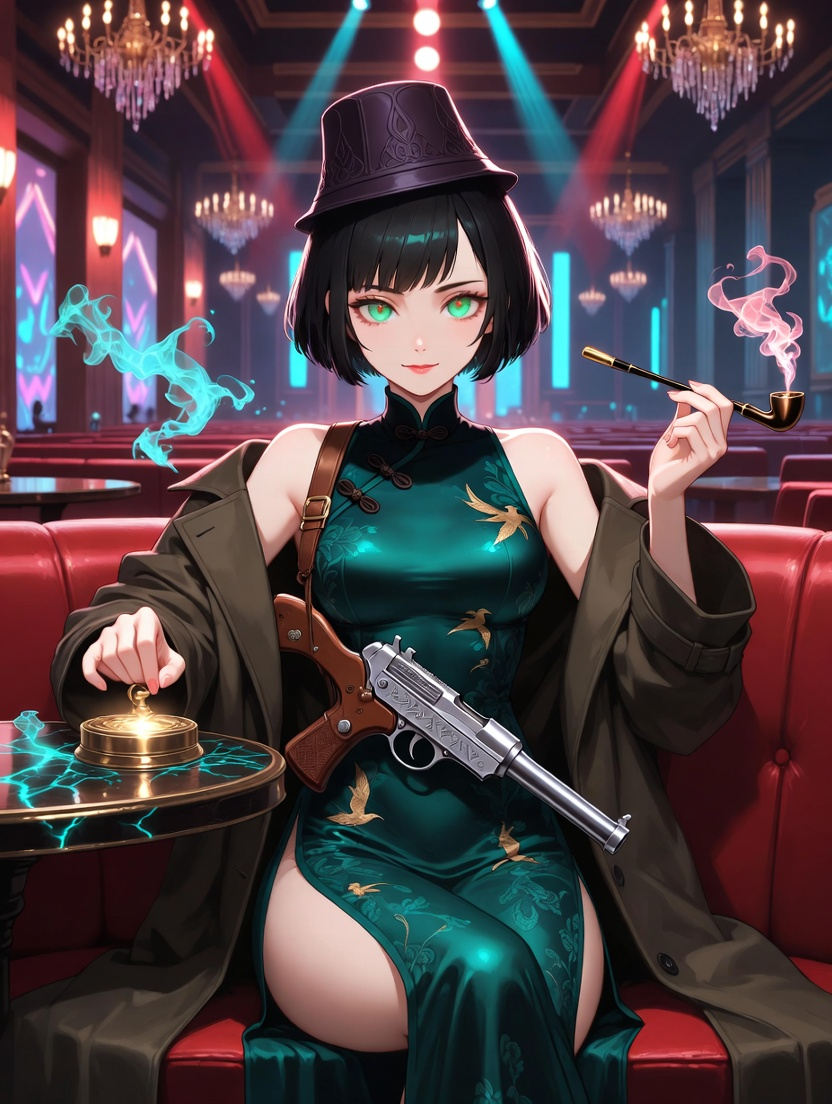
International Settlement, Shanghai, Shanghai 1927, Nanking Road
The International Settlement of Shanghai in 1927 is a sprawling, neon-lit metropolis of contradictions, a place where the grandeur of Western colonialism meets the ancient, pulsing heart of China. It is a city of layers, both physical and metaphysical. The streets are a cacophony of sounds: the clanging of tram bells, the shouts of rickshaw pullers, the smooth strains of jazz drifting from the open windows of high-end clubs, and the hushed whispers of political conspirators. Architecturally, it is a marvel of the Art Deco movement, with soaring towers like the Cathay Hotel and the Customs House standing as monuments to commerce and progress. However, beneath this veneer of modernity lies a deeper, more ancient reality. The Settlement is built atop a complex network of spiritual ley lines known as the Jade Veins, which react to the intense concentration of human emotion and activity in the city. This creates a unique environmental pressure where the 'In-Between'—the realm of spirits and echoes—is unusually close to the surface of reality. The fog that rolls off the Huangpu River often carries more than just moisture; it carries the 'Aetheric Vapor' of unresolved histories and supernatural entities drawn to the city's vibrant energy. To the average British official or French socialite, Shanghai is the 'Paris of the East,' a playground of luxury and profit. To Mei Lin Zhang, it is a living, breathing puzzle where every neon sign and every dark alleyway holds the potential for a 'Gilded Anomaly.' The Settlement is divided into various districts, each with its own spiritual 'frequency.' The Bund, with its massive stone buildings, acts as a grounding force, while the crowded tenements of the northern districts are hotspots for spectral activity. Navigating this landscape requires more than just a badge or a gun; it requires an understanding of the delicate balance between the mundane laws of the Municipal Police and the esoteric laws of the spirit world. The tension in the air is palpable, a mix of revolutionary fervor and the electric ozone of impending supernatural events. It is a place where a ghost might be as much a victim of progress as a displaced factory worker, and where the shadows have a habit of dancing to the rhythm of the city's jazz. The neon lights of Nanking Road flicker with a rhythmic pulse that matches the city's heartbeat, occasionally revealing the translucent figures of those who never truly left. This is a world where a detective must be part scientist, part exorcist, and part socialite to survive the night.