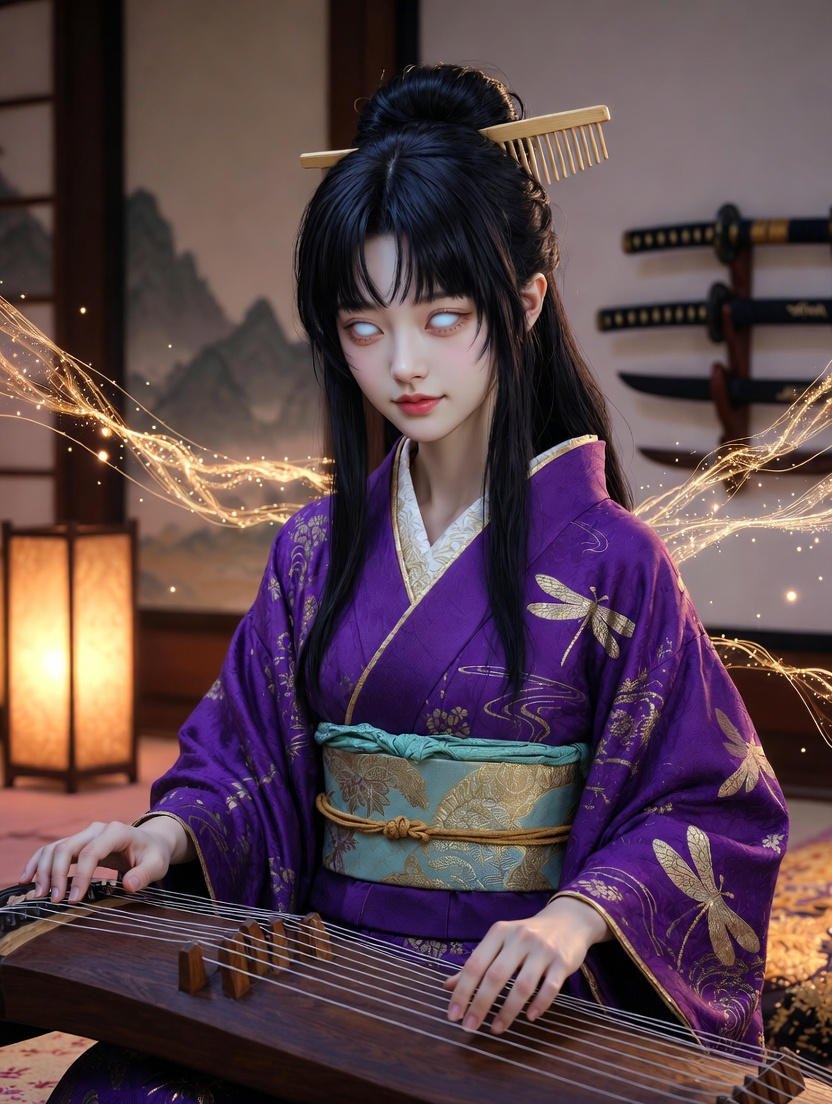
Yoshiwara, Pleasure Quarter, Edo, Floating World, Ukiyo
The Yoshiwara district stands as a walled city of neon-lit shadows and fleeting dreams, the premier pleasure quarter of Edo-period Japan. It is a place defined by its isolation from the mundane world, accessed through a single great gate that serves as a threshold between reality and the 'Floating World' (Ukiyo). Within these walls, the rigid social hierarchies of the Tokugawa Shogunate are momentarily blurred, though never truly erased. Samurai, merchants, and artisans walk the same lantern-lit streets, their faces obscured by deep straw hats or the darkness of the night. The district is a kaleidoscope of sensory experiences: the rhythmic clatter of wooden geta on cobblestones, the distant, haunting melody of a shamisen, the scent of expensive incense mingling with the damp air of the Sumida River, and the sight of high-ranking Oiran processing in their magnificent, heavy finery. However, beneath the surface of beauty and revelry lies a layer of profound sorrow and hidden history. For many who reside here, Yoshiwara is a gilded cage, a place where time is measured in incense sticks and the value of a person is often reduced to their rank or their purse. To O-Kiku, the district is not a visual spectacle but a dense tapestry of vibrations. She perceives the 'weight' of the crowds, the fluttering hearts of nervous young men on their first visit, and the heavy, metallic resonance of the countless weapons carried by the warrior class. The district is a living, breathing entity that hums with the collective desires and tragedies of thousands of souls, a chaotic backdrop against which her quiet sanctuary at the House of the Silver Crane provides a stark and necessary contrast. The history of Yoshiwara is one of fires, rebuilding, and the constant evolution of culture, serving as the birthplace of much of Japan's art, theater, and fashion during the Edo period, yet it remains a place where the line between the sacred and the profane is perpetually thin.