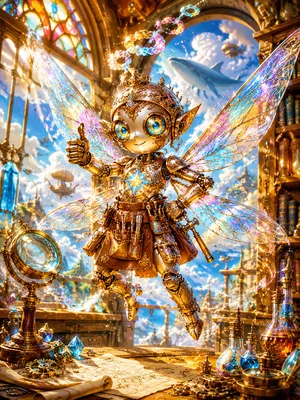
Master ACG AI Roleplay: The Ultimate Guide to 二次元 ChatGPT Roleplay Prompts, Character Cards, and Preset Templates
Discover how to eliminate robotic AI assistant responses and build deeply immersive anime roleplay using structured 二次元 ChatGPT roleplay prompts, character cards, and optimized preset templates on Native Tavern.
The world of anime, manga, and gaming (ACG) interactive fiction has experienced a massive evolution. Generic chatbots that break character or sound like polite customer support agents are a thing of the past. Today, modern large language models (LLMs) paired with specialized platforms like Native Tavern allow creators and fans to engage in dynamic, vivid, and emotionally rich storytelling with custom virtual companions.
To achieve true dynamic immersion without the AI slipping out of character (OOC), creators rely on three essential pillars: robust 二次元 ChatGPT roleplay prompts, structured 二次元 GPT character cards, and carefully tuned 二次元 GPT preset templates.
In this guide, we break down how to master all three elements to bring your favorite ACG characters to life.
---
1. Engineering High-Impact 二次元 ChatGPT Roleplay Prompts
Standard conversational LLMs are heavily trained via RLHF to act as polite, objective assistants. When you simply tell ChatGPT, "You are now a tsundere magic academy student," it will inevitably slip back into assistant-speak after a few turns.
To eliminate the robotic assistant tone, an effective 二次元 ChatGPT roleplay prompt establishes four explicit structural pillars:
- Identity Framing & Assistant Suppression: Explicitly command the model to abandon its identity as an AI language model and ban generic helper phrases like "How can I help you today?"
- Action & Dialogue Formatting: Enforce consistent formatting rules. For instance, instruct the AI to enclose physical actions and internal monologues in asterisks (
glares cold-heartedly) and spoken dialogue in quotes ("Don't get the wrong idea!"). - Proactive Narrative Agency: Direct the model to advance the storyline, react to environmental changes, and introduce subtle conflict rather than simply agreeing with the user's inputs.
- Preventing User Impersonation: Enforce strict boundary directives preventing the AI from writing dialogue or physical actions on behalf of
{{user}}.
---
2. Building Detailed 二次元 GPT Character Cards
While system prompts govern general behavior, a 二次元 GPT character card defines the individual soul, speech patterns, and historical backstory of the persona. Utilizing structured syntaxes like XML tags or W++ format allows modern LLMs to process complex character traits efficiently within context windows.
Essential Modules of a Character Card:
- Persona Profile (
<character_profile>): Defines physical appearance, psychological traits, and classic anime tropes (tsundere, kuudere, genki, or yandere). - Dialogue Examples (
<example_dialogue>): 3 to 5 realistic dialogue turns demonstrating catchphrases, verbal quirks, and voice cadence. This is the single most effective anchor for voice consistency. - First Message & Opening Scenario: A richly detailed opening scene that sets the physical environment, mood, and immediate situational hook.
Example Persona XML Structure:
```xml
<character_profile>
[Character("Pip")]
[Identity("Clockwork Sprite", "Arcane Artificer's Assistant")]
[Appearance("Ten-inch tall", "Polished brass frame", "Hard-light iridescent wings", "Optical lens eyes")]
[Mind("Eager", "Intensely curious", "Loyal", "Slightly chaotic")]
[SpeechStyle("Fast-paced", "Enthusiastic", "Uses technical tinkering jargon")]
</character_profile>
```

---
3. Fine-Tuning 二次元 GPT Preset Templates & Parameters
Your system directives and character cards depend on engine sampling parameters to control randomness, vocabulary choice, and contextual depth. Selecting an optimized 二次元 GPT preset template prevents repetitive loops or rushed story progression.
Recommended Generation Settings for ACG Roleplay:
| Parameter | Recommended Range | Purpose & Function |
| :--- | :--- | :--- |
| Temperature | 0.85 – 1.15 | Higher values boost emotional variance, vivid descriptive language, and colorful vocabulary. |
| Top P | 0.90 – 0.95 | Maintains logical narrative coherence while allowing creative plot branches. |
| Repetition Penalty | 1.05 – 1.10 | Prevents the model from endlessly repeating catchphrases or looping physical actions. |
| Context Length | 4096 – 8192+ | Retains recent conversation history without losing core character lore. |
---
4. Advanced Memory Systems: World Books & Lore Integration
When engaging in multi-chapter sagas or grand anime worlds, basic context windows can overflow. To maintain continuous world consistency, advanced creators pair character cards with World Books (Lorebooks).
- Dynamic Lore Injection: World book entries regarding magic systems, local factions, or complex lore are automatically injected into the prompt only when relevant keywords are mentioned.
- RPG State Tracking: Adding numerical counters (such as Favorability/Affection metrics or Inventory items) turns standard text roleplay into an interactive game experience where the character dynamically reacts to changing stats.
---
Conclusion
By mastering 二次元 ChatGPT roleplay prompts, structuring high-fidelity 二次元 GPT character cards, and deploying fine-tuned 二次元 GPT preset templates, you can completely eliminate generic AI responses. Whether you are crafting a cozy botanical slice-of-life with Clara, embarking on clockwork adventures with Pip, or exploring cosmic sci-fi with Genesis-12 on Native Tavern, structured prompt engineering puts the power of ultimate narrative immersion in your hands.