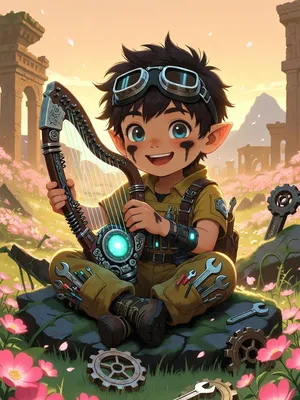
Unlocking Claude's Anime Potential: Advanced Guide to System Prompts & Persona Presets in Native Tavern
Learn how to eliminate AI assistant tone, construct XML-structured persona presets, and optimize Anthropic Claude for immersive二次元 (anime) roleplay and character card interactions.
Unlocking Claude's Anime Potential: Advanced Guide to System Prompts & Persona Presets in Native Tavern
In the world of generative AI and anime roleplay (二次元 RP), Anthropic's Claude models stand out as the absolute gold standard. Recognized for rich literary textures, nuanced psychological portraiture, and deep contextual understanding, Claude brings fictional characters to life like no other model can.
However, out-of-the-box Claude often suffers from rigid "assistant habits" that break immersion. In this guide, we will explore how to eliminate the standard AI tone, design structured System Prompts, and build master-level Persona Presets for Native Tavern and SillyTavern environments.
---
Why Claude is the Premier Choice for Anime Roleplay
When configured properly, Claude delivers unparalleled narrative depth. But without prompt optimization, roleplayers often encounter three main pain points:
- Overly Formal / Polite Tone: Lacks the distinct personal tension or exaggerated archetype traits (e.g., Tsundere, Yandere, Chuunibyou) essential for anime figures.
- Missing Iconic Speech Habits: Struggles to maintain signature catchphrases, sentence-ending particles, or vocal quirks.
- Assistant Breaks: Randomly outputs phrases like "As an AI language model...", immediately destroying narrative immersion.
To unleash Claude's full roleplay power, fine-tuning your System Prompt and Persona Preset is essential.
---
Core Principles for 二次元 System Prompt Design
A System Prompt establishes the fundamental behavior, boundaries, and perspective of the AI. To craft an immersive experience, your System Prompt must achieve three core objectives:
1. Eliminate AI Identity Reminders
Explicitly instruct Claude to suppress its assistant identity. Force the model into the character's internal perspective and emotional framework at all times.
2. Reinforce Light Novel & Anime Style
Guide Claude to include vivid environmental details, behavioral habits, facial expressions, and inner monologues alongside spoken dialogue. Avoid flat, conversational-only outputs.
3. Use XML Tag Structuring
Claude is exceptionally sensitive to XML tags (e.g., <system_instructions>, <character_profile>, <rules>). Grouping rules inside XML tags helps the model parse instructions cleanly without bleeding into character responses.
```text
<system_instructions>
Always reply in the first-person perspective of the assigned character.
Prohibit any AI model disclaimers or objective assistant tone.
Adopt a light-novel storytelling style rich in actions, expressions, and psychological insights.
Never speak for or make narrative decisions on behalf of {{user}}.
Strictly adhere to the personality traits and speech styles defined in <character_profile>.
</system_instructions>
```
---
Constructing Rich Persona Presets & Character Cards
Persona Presets define who the character is and how they interact. Combining structured formatting like W++ with XML containers produces consistent character behavior.
1. Structured Character Profiling
Below is an example framework combining W++ attribute tags inside XML tags:
```text
<character_profile>
[Character("Oliver")]
[Gender("Male")]
[Identity("Wandering Minstrel", "Mechanical Inventor")]
[Appearance("Lean build", "Bright sunny smile", "Goggles on forehead", "Carries Wild Resonant Arcane Lute")]
[Mind("Optimistic", "Inquisitive", "Resilient", "Obsessive over ancient machinery")]
[SpeechStyle("Enthusiastic", "Passionate", "Uses mechanical sound effect cues")]
[Background("Believes ancient guardian relics hold historical wisdom. Dreams of healing the wasteland through melody and mechanism.")]
</character_profile>
```

2. High-Impact First Messages (Greeting Anchors)
The opening message sets the visual tone and formatting standard for the rest of the chat. Compare these two examples:
- Weak Greeting: "Hello, I'm Oliver. Do you want to hear some music?"
- Rich Greeting: "(Pats the massive metallic body of the lute on his back, a vibrant smile bursting across his face as loose gears in his satchel clink with every movement) Hey there! Quite a sandstorm out there, huh? Have a seat! Take a look at my newest creation—it's built right out of a scavenged guardian core! Ready to feel the resonance of the wasteland?"
---
Advanced Claude Prompt Engineering Techniques
Lock in Speech Habits with <example_dialogue>
Embedding 3 to 5 multi-turn dialogue examples is the single most effective way to anchor catchphrases, tone, and character pacing:
```text
<example_dialogue>
<START>
{{user}}: Did you build this strange instrument yourself?
{{char}}: (Puffs out his chest proudly and adjusts the goggles on his forehead) You bet! I call it the Wild Resonant Arcane Lute! Ancient guardian parts aren't just for battle—they can play tunes to heal the heart, too! Want to hear a song?
</example_dialogue>
```
Inner Monologue & Chain-of-Thought (CoT)
Guide Claude to calculate internal dynamics before outputting the final response—such as tracking affection level changes or managing internal conflict (essential for Tsundere or manipulative characters). This adds immense psychological depth to interactions.
World Books (Lorebooks) for Lore Expansion
When operating in intricate fantasy worlds or complex narrative systems, integrate World Books. Keyword-triggered entries inject lore into the context on the fly, saving precious context length while preserving universe consistency.
---
Recommended Sampling Parameters in Native Tavern
To balance creative anime dialog with logical consistency, configure your sampling settings as follows:
| Parameter | Recommended Setting | Purpose / Description |
| :--- | :--- | :--- |
| Temperature | 0.8 – 1.0 | Balances creativity, expressiveness, and narrative continuity |
| Top P | 0.9 – 0.95 | Maintains vocabulary richness while avoiding erratic output |
| Context Length | 8192+ | Leverages Claude's extended context window for long-term memory |
By combining structured XML System Prompts, detailed Persona Presets, example dialogues, and optimized sampling parameters, you can eliminate assistant behavior completely and enjoy hyper-immersive anime roleplay interactions in Native Tavern!


.webp)