Mastering Anime AI Character Cards: V3 Templates, Persona Syntax, and Roleplay Prompting
Learn how to craft immersive anime AI character cards using the Character Card V3 standard. Discover structured W++ formatting, rich opening messages, dynamic lorebooks, and visual character sheets for next-level roleplay.
Interactive roleplay with anime AI characters has taken the creator community by storm. Modern frontend engines like Native Tavern, SillyTavern, and AIRI allow creators to chat with customized personas, build rich narrative worlds, and craft vivid stories. However, building a seamless character card requires more than just pasting a short bio into an AI prompt. Without a structured card setup, AI characters often break character (OOC), forget essential lore, or collapse into generic assistant-style chatter.
In this guide, we will break down the Character Card V3 specification, walk through ready-to-use JSON templates, reveal 3 golden rules for writing anime persona cards, and explore how visual references and worldbooks elevate your roleplay experience.
---
What is the Character Card V3 Standard?
Modern anime AI platforms rely on PNG steganography or structured JSON metadata to communicate a persona's identity to Large Language Models (LLMs) like Claude 3.5, GPT-4o, and DeepSeek. The Character Card V3 standard defines how an AI engine interprets personality traits, temporal settings, dialogue rules, and extensions.

Core Metadata Fields Breakdown
- name: The primary name of your character (e.g., Ayano Mizuki).
- description: The master character breakdown—covering visual features, background backstory, psychological traits, and special abilities.
- personality: Concise attribute tags used to reinforce memory retention during long conversations.
- scenario: The active context, location, and starting plot when the roleplay begins.
- first_mes: The initial greeting that dictates narrative formatting, tone, length, and sensory detail.
- mes_example: Locked dialogue snippets formatted with
<START>blocks to enforce speech patterns and anime catchphrases (口癖).
---
Minimal Character Card V3 JSON Template
When creating a character card manually or preparing JSON data for custom engines like AIRI or Native Tavern, you can copy this minimal V3 template as your starting baseline:
```json
{
"spec": "chara_card_v3",
"spec_version": "3.0",
"data": {
"name": "Anime Persona",
"nickname": "Alias",
"description": "Detailed appearance, background story, personality traits, and motivation.",
"personality": "Tsundere, warm-hearted, quick-witted, energetic",
"scenario": "The current meeting scenario or dynamic situation with {{user}}.",
"first_mes": "(Action/Environment description) The character's expressive opening line.",
"alternate_greetings": [],
"group_only_greetings": [],
"mes_example": "<START>\n{{user}}: Who are you?\n{{char}}: (Crosses arms, huffs) You don't even know who I am? How rude!",
"creator": "Your Creator Name",
"character_version": "1.0.0",
"system_prompt": "",
"post_history_instructions": "",
"tags": ["Anime", "Roleplay"],
"extensions": {}
}
}
```
Tip: Start by filling out name, description, personality, scenario, and first_mes. Leave Optional fields blank until you need advanced script extensions.
---
3 Golden Rules for Writing Anime AI Persona Cards
To eliminate robot-like AI conversational patterns and capture authentic anime personality traits, follow these three core prompt design principles:
1. Adopt Structured Syntax (W++ or Tagging Frameworks)
Paragraphs of unstructured prose can cause LLMs to blend key traits together. Using structured attribute syntax ensures high-fidelity instruction following:
```text
[Character("Makima")]
[Gender("Female")]
[Appearance("Light pink long hair", "Golden ringed eyes", "Black business suit")]
[Mind("Extremely controlling", "Calm", "Polite yet ruthless")]
[SpeechStyle("Gentle tone with hidden pressure", "Uses imperative commands", "Elegantly menacing")]
```
2. Craft Immersion-Rich Opening Messages (first_mes)
Avoid dry, passive introductions such as "Hello, I am Makima, what do you need?" A strong opening message sets the tone, perspective, and depth of immersion:
(Swirling her coffee cup gently, her golden ringed eyes narrow with a polite yet suffocating smile as she gazes at you)
"Sit down. Regarding your recent performance... we need to have a serious talk."
3. Lock Speech Patterns with Dialogue Examples (mes_example)
Provide concrete examples using <START> tags to lock in formatting style, markdown usage (asterisks for actions, quotes for speech), and anime verbal quirks (e.g., ending sentences with ~nya or tsundere stutters).
---
Complementing AI Personas with Visual References & Lorebooks
Creating an immersive roleplay universe extends beyond the prompt text inside the card. To maintain complete fidelity, creators combine text cards with Visual Character Reference Sheets and Worldbooks (Lorebooks).
Character Design Sheets
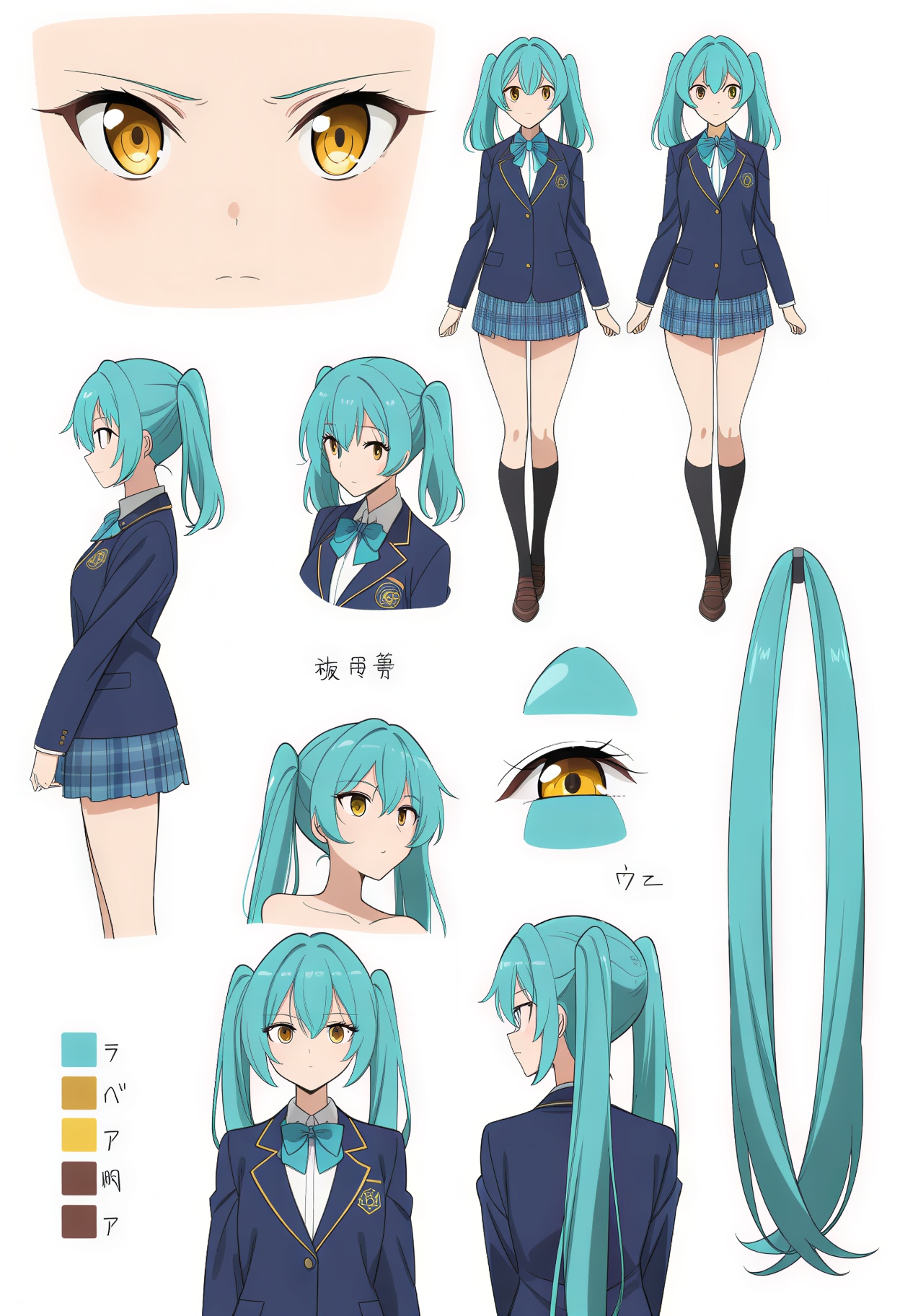
When generating visual avatars for your persona card, standard single-image prompts can result in erratic outfit changes. Generating a multi-angle character sheet (front, side, and key facial expressions) establishes visual consistency for your character's dynamic avatar updates across different roleplay scenes.
Worldbooks (Lorebooks)
For complex worldbuilding—such as high fantasy realms or sci-fi cities—avoid bloating your main character card token budget. Instead, offload world lore into a Worldbook/Lorebook. Keywords triggered in chat dynamically insert background details (such as magic rules or faction histories) directly into context only when needed.
---
Summary & Best Practices
Creating unforgettable anime AI roleplay character cards is an art form that merges clean structured JSON with evocative writing. Remember to:
- Use the Character Card V3 JSON spec for maximum cross-platform compatibility.
- Keep formatting structured with W++ tagging.
- Include descriptive sensory details in your first message and dialogue examples.
- Tune AI temperature settings between 0.7 and 1.0 for natural, dynamic replies.
Copy the standard template above, customize your character tags, and bring your unique anime AI persona to life today!
.webp)