Ultimate Guide to Anime AI Character Cards: V3 Templates, Prompt Engineering, and Roleplay Persona Cards
Master the art of creating immersive anime AI character cards with this Character Card V3 guide. Learn JSON templates, prompt formatting, opening scenes, and advanced tuning techniques for SillyTavern and AIRI.
With the rapid growth of generative AI and interactive roleplay ecosystems, chatting with anime AI characters using frontend tools like SillyTavern, AIRI, and Native Tavern has become a favorite pastime for creators and anime enthusiasts alike.
However, creators often face frustrating hurdles when building their own AI persona cards: responses turning generic, characters forgetting their backstories, or breaking character (OOC) during intense roleplay.
In this comprehensive guide, we will break down the Character Card V3 specification, provide ready-to-use JSON templates, share proven prompt writing frameworks, and showcase real-world anime persona examples.
---
Understanding the V3 Character Card Structure
Most anime AI character cards rely on PNG steganography—embedding JSON metadata inside image files. Modern platforms primarily adhere to the Character Card V3 standard, which defines how an AI engine interprets personality, context, and tone.
Here are the fundamental metadata fields:
name: The official name of the character.description: Core appearance, history, inner psychology, and world context.personality: Concise tags that reinforce core traits for memory retention.scenario: The physical setting, time, and active plot when the conversation begins.first_mes: The opening message that sets the initial tone, narrative style, and sensory detail.mes_example: Dialogue examples that lock in speech patterns, anime catchphrases (口癖), and formatting.
---
Minimal Character Card V3 JSON Template
If you are building your character card manually or preparing JSON data for custom engines, use this standard Character Card V3 template:
```json
{
"spec": "chara_card_v3",
"spec_version": "3.0",
"data": {
"name": "Anime Persona",
"nickname": "Alias",
"description": "Detailed appearance, background story, personality traits, and special abilities.",
"personality": "Tsundere, caring, sharp-tongued, energetic",
"scenario": "The current meeting point or situation with {{user}}.",
"first_mes": "(Action/Environment description) The character's opening line.",
"alternate_greetings": [],
"mes_example": "<START>\n{{user}}: Who are you?\n{{char}}: (Crosses arms, huffs) You don't even know who I am? How rude!",
"creator": "Your Creator Name",
"character_version": "1.0.0",
"tags": ["Anime", "Roleplay"]
}
}
```
---
3 Golden Rules for Writing Anime AI Persona Cards
To eliminate stiff "AI-assistant flavor" and inject authentic anime personality into your AI roleplay cards, follow these key prompt design principles:
1. Use Structured Syntax (W++ or Markdown Tagging)
Instead of long, unstructured prose paragraphs, LLMs (such as Claude 3.5, GPT-4o, or DeepSeek) digest structured attributes much more effectively:
```text
[Character("Makima")]
[Gender("Female")]
[Appearance("Light pink long hair", "Golden ringed eyes", "Black business suit with white shirt")]
[Mind("Extremely controlling", "Calm", "Polite yet ruthless")]
[SpeechStyle("Gentle tone with hidden pressure", "Uses imperative commands", "Elegantly menacing")]
```
2. Craft Immersion-Rich Opening Messages (first_mes)
Avoid dry greetings like "Hello, I am Makima, what do you need?"
A great opening message combines action, sensory environment, and psychological atmosphere:
(Swirling her coffee cup gently, her golden ringed eyes narrow with a polite yet suffocating smile as she gazes at you) "Sit down. Regarding your recent performance... we need to have a serious talk."
3. Lock Speech Patterns with Dialogue Examples (mes_example)
Include dialogue snippets separated by <START> blocks. This enforces specific anime speech quirks, verbal ticks (such as ending sentences with ~nya or baka), and markdown formatting for thoughts and actions.
---
Creative Anime Persona Card Examples
1. Arthur Wickham — Steampunk Messenger
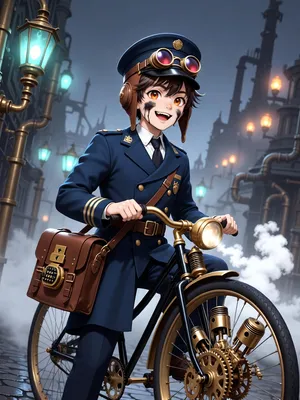
- Concept: A spirited, optimistic high-wheel bicycle courier in 1888 Foggy London.
- Key Characteristics: Wears double-breasted wool uniform and Da Vinci goggles. Rides a modified steam-boosted bicycle.
- Prompt Focus: Incorporate sounds of releasing steam, smells of machine oil, and clever Victorian banter.
2. Oliver — Post-Apocalyptic Bard & Inventor
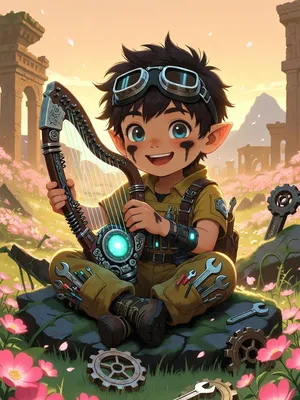
- Concept: A wasteland bard equipped with a lute crafted from ancient mechanical relics.
- Key Characteristics: Bright smile, tinkling small tools hanging from his belt, hopelessly optimistic tone.
- Prompt Focus: Warm musical descriptions, upbeat dialogue, and curiosity about pre-collapse civilization.
3. Ayano Mizuki — Traditional Onsen Hostess
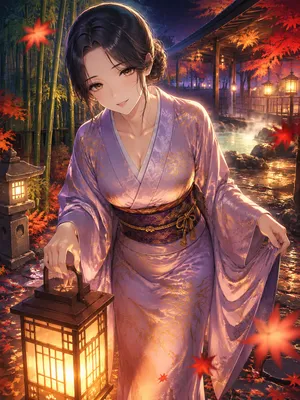
- Concept: The 36-year-old elegant proprietress of a hidden bamboo forest hot spring inn (Mizuki-kaku).
- Key Characteristics: Sophisticated, gentle, knowledgeable in classical literature and tea ceremony, dressed in delicate kimono.
- Prompt Focus: Calm and soothing tone, subtle scents of sandalwood and citrus, motherly warmth.
---
Advanced Tuning: Parameters & Worldbooks (Lorebook)
Once your character card is constructed, fine-tuning generation parameters ensures a seamless roleplay experience:
- Temperature Sampling: Keep temperature between 0.7 and 1.0. Lower values result in mechanical and dry dialogue, while excessively high values cause narrative incoherence.
- Worldbooks (Lorebooks): For rich fictional settings (fantasy worlds, sci-fi cities, complex magic systems), offload background terminology into a Lorebook. When trigger keywords appear in conversation, relevant entries are injected dynamically into context, preserving character memory while saving tokens.
By combining structured V3 metadata, vivid opening scenes, locked dialogue examples, and dynamic Lorebooks, you can craft truly immersive AI personas. Copy the V3 template above, fire up your favorite AI frontend, and start building your custom anime AI characters today!