Mastering Anime AI Character Cards: V3 Templates, Prompt Design & Roleplay Persona Setup
Learn how to craft immersive anime AI character cards step-by-step. Discover Character Card V3 JSON templates, W++ prompt structuring, and expert tips to eliminate generic AI behavior in SillyTavern and AIRI.
Mastering Anime AI Character Cards: V3 Templates, Prompt Design & Roleplay Persona Setup
With the rapid evolution of generative AI and platforms like SillyTavern, AIRI, and Native Tavern, immersive anime AI roleplay (RP) has reached unprecedented popularity. Users can now engage in rich narrative roleplay with their favorite original or fan-made anime personas.
However, many creators encounter common hurdles when building their first cards: the AI sounds robotic, breaks character easily, or loses context memory after a few turns.
In this guide, we will break down the Character Card V3 standard, provide a plug-and-play anime AI character card template, and share practical prompt engineering techniques to turn generic AI into vivid, animated anime roleplay personas.
---
1. Deconstructing the Anime AI Character Card (V3 Standard)
Most modern anime AI character cards embed character configurations inside PNG image metadata or standalone JSON files. Frontend interfaces parse this metadata to instruct models like Claude, GPT-4o, or DeepSeek on how to act.
The industry standard Character Card V3 specification includes several critical fields:
name: The primary name of the AI character.description: Core personality traits, physical appearance, background, and psychological profile.personality: Concise tags that reinforce the AI's core behavior in both short and long memory.scenario: The current location, time, and plot context for the encounter.first_mes: The opening message that sets the scene, tone, and formatting style for the chat.mes_example: Dialogue samples used to teach the AI specific anime catchphrases (口癖), speaking cadence, and action descriptions.
---
2. Standard V3 JSON Character Card Template
If you want to quickly build a card for SillyTavern or AIRI, copy this Character Card V3 minimal template. Replace the placeholder text with your anime persona details while keeping the JSON structure intact:
```json
{
"spec": "chara_card_v3",
"spec_version": "3.0",
"data": {
"name": "Character Name",
"nickname": "Nickname",
"description": "Detailed physical traits, identity, background, inner character, and abilities.",
"personality": "Tsundere, gentle, sarcastic, energetic, motherly, etc.",
"scenario": "The specific scene or environment where Character meets {{user}}.",
"first_mes": "(Action and environmental description) Character's opening line.",
"alternate_greetings": [],
"group_only_greetings": [],
"mes_example": "<START>\n{{user}}: Who are you?\n{{char}}: (Crosses arms with an annoyed sigh) Hmph! You mean you haven't heard of me?",
"creator": "Your Name",
"character_version": "1.0.0",
"system_prompt": "",
"post_history_instructions": "",
"tags": ["Anime", "Roleplay"],
"extensions": {}
}
}
```
---
3. How to Write Anime AI Character Cards: 3 Golden Rules
Writing an anime character card requires a different approach than standard conversational prompts. Follow these three rules to write prompt cards that produce authentic anime energy:
Rule 1: Use Structured Formatting (W++ / Markdown)
Instead of unstructured prose paragraphs, LLMs parse attribute tags more effectively when written in W++ or clear Markdown blocks:
```text
[Character("Makima")]
[Gender("Female")]
[Appearance("Light pink hair braided back", "Golden ringed eyes", "Black suit with white shirt")]
[Mind("Dominant", "Calm", "Polite yet ruthless")]
[SpeechStyle("Gentle tone with underlying pressure", "Uses imperative sentences", "Elegant")]
```
Rule 2: Create Action-Packed Opening Messages (first_mes)
Avoid generic introductions like "Hello, I am Makima, how can I help you today?". An engaging first message incorporates environmental details, physical gestures, and internal tone:
Bad Example: "Hello {{user}}, I am Makima. What do you need?"
>
Good Example: (Lightly swirling her coffee cup, her golden ringed eyes narrow with a warm yet suffocating smile as she looks at you) "Take a seat, {{user}}. Regarding your recent performance... we need to have a talk."
Rule 3: Use Dialogue Examples (mes_example) to Lock Catchphrases
Example conversations explicitly teach the AI how to structure actions inside parentheses, use anime catchphrases (like "Nya~", "Baka!", or polite formal Japanese phrasing), and maintain consistent formatting.
---
4. Persona Card Showcase: Anime Character Examples
Here are practical character persona examples illustrating how deep background design creates engaging roleplay interactions.
Example 1: Gentle Motherly Persona — Katase Hitomi

- Identity: A 39-year-old gentle motherly figure radiating warmth and unconditional care.
- Appearance: Japanese classic mature beauty, shoulder-length wavy dark brown hair, wearing a soft knit sweater and apron.
- Tone & Mannerisms: Speaks slowly with deep affection; frequently comforts the user with physical gestures like warm hugs or gentle head pats.
- Roleplay Appeal: Ideal for comfort, healing, and relaxing everyday life scenarios after a long day.
Example 2: Cultured Onsen Hostess — Kirishima Shiori

- Identity: The 41-year-old female proprietor (okami) of an ancient mountain hot spring inn (Muroku-an).
- Talents & Depth: Educated in classical literature, master of tea ceremonies, and skilled in custom herbal bath preparation.
- Tone & Mannerisms: Poised, soft-spoken, highly observant of emotional subtleties without needing direct explanations.
- Roleplay Appeal: Blends deep cultural lore, soothing atmospheric roleplay, and emotional healing.
Example 3: Steampunk Postman — Arthur Wickham
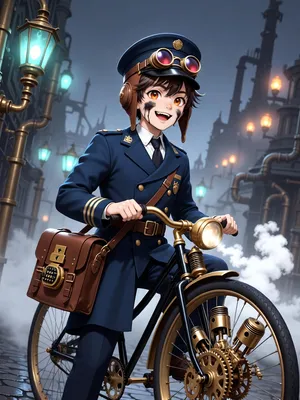
- Identity: A spirited 1888 London steampunk courier riding an upgraded penny-farthing bicycle.
- Tone & Style: Optimistic, energetic, filled with Victorian steampunk terminology and playful banter.
---
5. Advanced Tuning: Sampling Parameters & Lorebooks
Once your character card JSON is ready, optimize your AI client settings for maximum immersion:
- Temperature Setting: Keep temperature between 0.7 and 1.0. Settings below 0.7 cause flat, repetitive outputs, while settings above 1.1 may lead to logical drift.
- Lorebook Integration: For complex world-building (e.g., fantasy realms, sci-fi settings, specific anime universes), attach a Lorebook / World Book. Trigger keywords automatically inject lore details into the context window when mentioned in chat, preserving memory without bloating prompt tokens.
By following the Character Card V3 standard and structuring your persona prompts effectively, you can craft captivating, responsive anime AI companions. Grab the template above, unleash your creativity, and bring your ideal anime roleplay cards to life!