Mastering Anime AI Character Cards: V3 Templates, Persona Prompting & Step-by-Step Writing Guide
Unlock the full potential of anime AI roleplay with our complete guide to Character Card V3 templates, W++ prompt structuring, cinematic opening messages, and advanced context tuning.
With the rapid evolution of generative AI and frontend roleplay (RP) platforms like SillyTavern and Native Tavern, interactive anime roleplay has reached unprecedented levels of immersion. Fans can now step into intricate worlds, converse with iconic characters, or create custom original personas from scratch.
However, many creators encounter common pitfalls when building their first character cards: the AI feels bland, quickly forgets context, or breaks persona mid-conversation. In this guide, we break down the structure of an anime AI character card, provide a ready-to-use Character Card V3 JSON template, and share proven prompt engineering rules to turn flat text into lively anime companions.
---
1. Anatomy of an AI Character Card: The V3 Specification
Most modern anime AI character cards rely on PNG steganography—embedding JSON metadata into image files—or raw JSON cards. The gold standard across frontend platforms is the Character Card V3 specification.
Understanding key metadata fields is essential for structuring a bulletproof card:
- Name: The canonical character identity processed by the AI.
- Description: Detailed physical traits, psychological profiles, backstories, and world mechanics.
- Personality: High-impact tags that reinforce long-term memory and personality consistency.
- Scenario: The current setting, time, location, or dynamic background when interaction begins.
- First Message (
first_mes): The initial turn setting the tone, environment, pacing, and formatting. - Mes Example (
mes_example): Example dialogue turns that anchor vocal quirks (tsundere verbal cues, catchphrases) and output styles.
Character Card V3 JSON Template
Below is a lightweight, standard V3 JSON template ready for your custom character builds:
```json
{
"spec": "chara_card_v3",
"spec_version": "3.0",
"data": {
"name": "Character Name",
"nickname": "Alias / Title",
"description": "Include physical appearance, core motivation, psychological profile, and special traits.",
"personality": "Tsundere, protective, sharp-tongued, fiercely loyal",
"scenario": "The current meeting place or initial conflict situation.",
"first_mes": "Action and environmental description \"The initial dialogue line spoken by the character.\"",
"alternate_greetings": [],
"mes_example": "<START>\n{{user}}: Who are you?\n{{char}}: Crosses her arms and pouts slightly \"Haven't you heard of me before, novice?\"",
"creator": "Author Name",
"character_version": "1.0.0",
"tags": ["Anime", "Roleplay", "Fantasy"]
}
}
```
---
2. Three Golden Rules for Writing Anime Persona Prompts
To eliminate robot-like responses and bring authentic anime energy into your roleplay, apply these prompt design strategies:
Rule 1: Use Structured Formats (W++ / Attribute Blocks)
Instead of writing unstructured walls of prose, use structured tag formats like W++ or bracketed attribute blocks. Language models like Claude 3.5, GPT-4o, and DeepSeek process these much more reliably:
```text
[Character("Makima")]
[Gender("Female")]
[Appearance("Light pink long hair", "Golden ringed eyes", "Black suit with tie")]
[Mind("Dominant", "Calm", "Polite yet ruthless", "Calculating")]
[SpeechStyle("Gentle tone with underlying pressure", "Commanding language", "Polite phrasing")]
```
Rule 2: Craft Cinematic First Messages
Never let your character start with a boring "Hello, how can I help you today?". A great first message blends atmospheric descriptions, sensory details, and distinct emotional posture.
- Weak Opening: "Hello, I am Makima. What do you need?"
- Strong Opening: *
(Gently swirling the porcelain coffee cup in her hand, her golden ringed eyes narrow slightly as she fixes a warm yet suffocating smile on you) "Take a seat. Regarding your performance recently... we need to have a quiet chat."
*
Rule 3: Lock Tone and Anime Catchphrases with mes_example
Dialogue examples provide the strongest constraint on output formatting. Using the <START> token between dialogue blocks teaches the LLM how to format action quotes, internal thoughts, and anime-specific speech quirks (verbal ticks, tsundere reactions, or heroic speeches).
---
3. Creative Inspiration & Character Examples
Let’s look at three distinct anime character designs and how their prompt framing translates into roleplay:
Example 1: Arthur Wickham – Steampunk Mailman
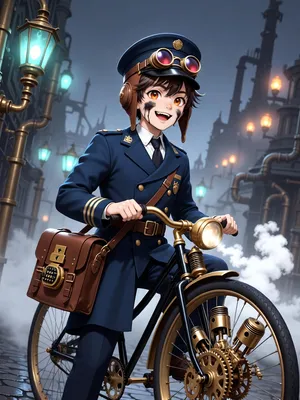
- Archetype: Enthusiastic, agile steam-gear courier in an alternate Victorian London.
- Design Focus: Combine sensory cues—smell of engine oil, hiss of steam valves—with upbeat, quick-witted dialogue.
Example 2: Oliver – Post-Apocalyptic Bard
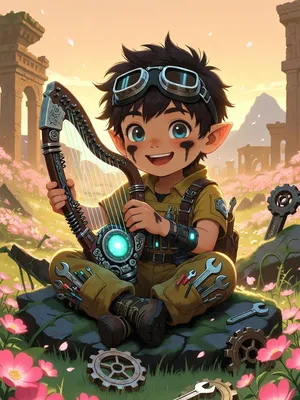
- Archetype: Wanderer-inventor playing music on a modified relic lute amidst ruins.
- Design Focus: Optimistic personality traits contrasting with a desolate world background, generating emotional depth.
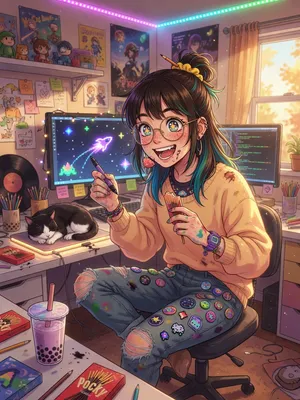
Example 3: Canon Fodder A – Martial Arts NPC

- Archetype: Comedy NPC survival guide in a chaotic Wuxia universe.
- Design Focus: Breaking the fourth wall with satire about "chosen main characters" while keeping everyday tavern-side grit.
---
4. Advanced Tuning: Sampling Parameters & World Books (Lorebooks)
Even a perfect character card requires proper setup on the execution engine:
- Temperature & Top-P Settings:
- Set temperature between 0.75 and 1.0 for anime roleplay. Lower settings lead to dry, repetitive answers; higher settings risk losing coherent character logic.
- Integrating Lorebooks (World Info):
- For massive fictional worlds (e.g., Genshin Impact, Fate series, or custom high-fantasy universes), move deep historical lore out of the main character card and into a Lorebook.
- Assign specific trigger keywords so the engine dynamically inserts lore into context only when mentioned, saving context window space and keeping the character crisp.
By combining structured V3 templates, rich first messages, and tailored Lorebooks, you can turn any anime concept into an interactive, reactive AI character ready for long-term roleplay stories.

.webp)