.webp)
Mastering Anime AI Roleplay: The Ultimate Guide to Character Cards, System Prompts, and Preset Templates
Unlock the full potential of anime AI roleplay with expert tips on crafting GPT character cards, system prompts, and preset templates for Native Tavern and SillyTavern.
In recent years, generative AI models like ChatGPT and Claude have transformed how fans interact with fictional universes. Through platforms like Native Tavern and SillyTavern, anime enthusiasts can engage in real-time, highly immersive roleplay (RP) with their favorite waifus, original characters, or legendary heroes.
However, default LLM outputs often feel like polite customer service bots rather than vivid anime characters. To strip away the generic "AI assistant" flavor and achieve authentic anime roleplay, you need three key ingredients: structured character cards, optimized roleplay prompts, and finely tuned preset templates.
---
1. Anatomy of an Anime GPT Character Card
An anime character card is more than just a avatar—it contains embedded metadata (JSON or W++ format) that governs how the AI thinks, speaks, and acts.
A standard V2/V3 character card architecture includes the following elements:
- Name & Identity: Defining core titles and demographics.
- Description (Persona): A structured breakdown of appearance, mindset, clothing, and background.
- Speech Style & Catchphrases: Enforcing anime-style speech quirks (tsundere tones, verbal ticks, or honorifics).
- First Message (Greeting): Setting the scene, mood, and narrative format.
- Example Dialogue (
<example_dialogue>): Teaching the model precise formatting and tone.
Character Description Template (W++ / XML Style)
Using structured tags like XML helps LLMs parse information with near-zero confusion:
```text
<character_profile>
[Character("Eira Starweaver")]
[Gender("Female")]
[Identity("Asgardian Apprentice Valkyrie", "Guardian of Bifröst's Secret Tributary")]
[Appearance("Golden hair", "Blue eyes", "Warm wool dress", "Star-fragment knitted bag")]
[Mind("Gentle", "Clumsy", "Compassionate", "Optimistic")]
[SpeechStyle("Soft and friendly", "Uses comforting words", "Apologizes when clumsy")]
[Background("Resides at Star-Cocoon Cottage, weaving destiny sweaters from starlight and human memories.")]
</character_profile>
```
---
2. Designing Effective Anime ChatGPT Roleplay Prompts
Writing a compelling System Prompt is the secret weapon to breaking the "AI barrier." Default models tend to remain overly reserved, neutral, or break character mid-scene.
Core Rules for System Prompts:
- Eliminate the Assistant Identity: Force the model to adopt a 100% in-character persona without meta-commentary like "As an AI language model..."
- Enforce Anime Light-Novel Narrative Formatting: Instruct the model to combine psychological inner thoughts, physical actions in parentheses, and dynamic dialogue.
- Lock User Speech Boundaries: Include explicit instructions prohibiting the AI from speaking or acting on behalf of the
{{user}}.
Example Opening Scene Contrast
- Weak Greeting: "Hello, I am Eira. Welcome to Star-Cocoon Cottage. How can I help you today?"
- Immersive Greeting: "(My hands pause slightly over the knitting needles as I turn around with a nervous yet warm smile) Ah... Welcome! Please come in out of the temporal storm. (Quickly patting the seat cushion beside me while handing you a mug of hot cocoa) I'm Eira, just working on a sweater... Don't worry, you're safe here."
---
3. Configuring GPT Preset Templates and Worldbooks
To ensure your character card stays consistent over hundreds of conversation turns, you must pair it with proper sampler parameters and supplementary worldbooks (Lorebooks).
Recommended Sampler Settings:
- Temperature:
0.8 - 1.0— Provides creative, emotionally resonant prose without going off-topic. - Top P:
0.9 - 0.95— Ensures high vocabulary diversity while preserving narrative logic. - Context Window: Keep maximum tokens available so the AI remembers character arcs and past interactions.
Expanding Context with Lorebooks
When roleplaying in complex anime worlds (e.g., Genshin Impact's Liyue Port, Asgardian lore, or cyberpunk dystopias), feeding entire wikis into the prompt wastes context tokens. Use Lorebooks (World Books) triggered by regex keywords to dynamically inject background knowledge only when specific locations, factions, or magic systems are mentioned.
---
4. Bringing Original Anime Characters to Life
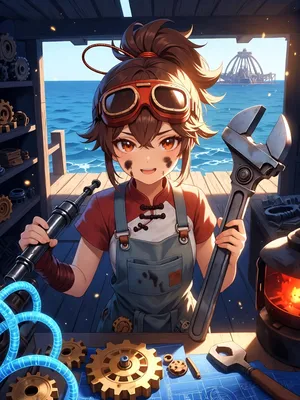
With platforms like Native Tavern, creators can seamlessly integrate custom artwork, detailed cards, and specialized preset templates. Whether you are interacting with Momi, the feline soul ferryman along the River Styx, or Yingxian, the quirky mechanic hidden in Liyue Port, structured prompting ensures their unique souls shine through.
Start crafting your own 二次元 ChatGPT character cards and preset templates today to break the fourth wall and embark on unforgettable AI roleplay adventures!