Native Tavern
Mastering 二次元 AI Worldbuilding: Your Guide to Crafting Immersive Anime Lorebooks
二次元 AI world booksApril 24, 20266 min read二次元 AI world books

Mastering 二次元 AI Worldbuilding: Your Guide to Crafting Immersive Anime Lorebooks

Dive into the vibrant world of 二次元 and discover how to leverage its rich narratives for AI-powered worldbuilding. Learn to create detailed anime-style lorebooks and character cards that bring your AI roleplay and stories to life.

Mastering 二次元 AI Worldbuilding: Your Guide to Crafting Immersive Anime Lorebooks

In the rapidly evolving landscape of AI-powered storytelling and roleplay, the demand for rich, consistent, and captivating worldbuilding has never been higher. For fans of anime, manga, and gaming culture – collectively known as 二次元 (Er-ci-yuan) – the desire to create and interact with AI in their favorite aesthetic is paramount. But how do you translate the intricate narratives and vibrant settings of 二次元 into structured data that AI can understand and utilize effectively? The answer lies in mastering AI world books and lorebook templates.

Platforms brimming with original content, such as Qidian Reader (起点读书), offer a treasure trove of inspiration. With categories dedicated to genres like fantasy, urban, sci-fi, and critically, 二次元, these platforms showcase the depth and breadth of immersive storytelling. They even feature elements like "角色卡牌" (character cards) and "AI听读" (AI listening/reading), hinting at the convergence of traditional storytelling and artificial intelligence.

The Power of 二次元 Worlds for AI

The 二次元 category on major reading platforms isn't just a label; it's a gateway to countless fully realized worlds, each with its unique rules, characters, and conflicts. These stories provide a blueprint for what makes an engaging anime-style universe. For AI creators, this means:

  • Rich Source Material: A vast library of established tropes, character archetypes, magic systems, and technological advancements specific to the 二次元 aesthetic.
  • Community-Driven Lore: Many of these stories have active fan communities, demonstrating which elements resonate most with audiences.
  • Inspiration for Prompts: The detailed descriptions and plotlines can be broken down into components to create sophisticated AI prompts and presets.
A screenshot of a mobile reading app, showcasing various book covers and interface elements.

Why AI World Books Matter

An AI world book, or lorebook, acts as the foundational knowledge base for your AI. Without it, your AI might generate inconsistent details, contradictory facts, or generic scenarios. A well-constructed 二次元 AI world book ensures that your AI-generated stories, character interactions, or roleplay sessions remain true to the chosen aesthetic and internal logic.

Crafting Your Anime AI World: A Worldbuilding Guide

Building an 二次元 world for AI requires a systematic approach. Think of it as distilling the essence of your favorite anime series or web novel into digestible, structured information. Here's a guide to get you started:

1. Define Your Core Concept

  • Genre: Is it a high fantasy isekai, a futuristic cyberpunk adventure, a slice-of-life school drama, or something else entirely?
  • Unique Selling Proposition (USP): What makes your world stand out? A unique magic system, a specific technological advancement, or a compelling central conflict?

2. Establish the Big Picture

  • World Map/Geography: Describe key locations, cities, regions, and their characteristics. Are there floating islands, ancient ruins, or futuristic megacities?
  • History & Timeline: Outline major historical events, wars, eras, and their impact on the current world state.
  • Cultures & Factions: Detail the various races, nations, organizations, or social groups, including their customs, beliefs, and relationships.

3. Detail the Mechanics

  • Magic/Power System: If applicable, clearly define how magic works, its limitations, sources, and categories (e.g., elemental, spiritual, technological).
  • Technology Level: Is it steampunk, cyberpunk, modern, or a blend? What are the key technological advancements and their societal impact?
  • Flora & Fauna: Unique creatures, plants, and environmental hazards that contribute to the world's distinctiveness.

4. Character Foundations (Leveraging Character Cards)

Platforms like Qidian mention "角色卡牌" (character cards). This is a crucial concept for AI worldbuilding. Each main character, significant NPC, or even powerful entity should have a dedicated entry in your lorebook, much like a character card. This ensures consistency in their portrayal.

The Ultimate 二次元 AI Lorebook Template

To effectively communicate your 二次元 world to an AI, a structured lorebook template is essential. Here’s a comprehensive template you can adapt for your creations:

```markdown

[World Name] - 二次元 AI Lorebook

1. World Overview

  • Name: [e.g., Aethelgard, Neo-Kyoto, Eldoria]
  • Genre: [e.g., Fantasy Isekai, Sci-Fi Cyberpunk, Urban Romance]
  • Core Concept: [A brief, compelling summary of the world's unique premise]
  • Aesthetic/Vibe: [e.g., Gritty, whimsical, melancholic, vibrant, dark fantasy]

2. Geography & Locations

  • Continent/Region 1: [Name]
  • Description: [Overall characteristics, climate, prominent features]
  • Key Locations:
  • [City/Area Name]: [Description, significance, notable landmarks]
  • [City/Area Name]: [Description, significance, notable landmarks]
  • Continent/Region 2: [Name]
  • ...

3. History & Major Events

  • Ancient Era: [Key events, legendary figures, foundational myths]
  • Modern Era: [Recent conflicts, technological booms, social shifts]
  • Current State: [The present political, social, and environmental situation]

4. Cultures & Factions

  • Faction 1: [Name]
  • Description: [Goals, ideology, power structure, typical members]
  • Relationship to other factions: [Allies, enemies, neutral]
  • Faction 2: [Name]
  • ...
  • Races/Species: [If applicable, describe unique traits, abilities, societal roles]

5. Magic & Power System

  • Name of System: [e.g., Mana Flow, Spirit Energy, Psionic Abilities]
  • Source: [Where does the power come from?]
  • Mechanics: [How is it used? What are the rules and limitations?]
  • Tiers/Ranks: [If applicable, different levels of power users]

6. Technology & Innovation

  • Overall Tech Level: [e.g., Medieval, Steampunk, Modern, Advanced Sci-Fi]
  • Key Technologies: [Specific inventions, devices, or scientific principles]
  • Impact on Society: [How does technology shape daily life, warfare, or culture?]

7. Notable Characters (Character Card Template)

Character: [Character Name]

  • Full Name: [e.g., Kaito Ishikawa, Seraphina von Edelweiss]
  • Appearance: [Detailed description: hair, eyes, height, build, distinguishing marks, typical attire]
  • Age: [e.g., 17, appears 200, ageless]
  • Gender: [Male/Female/Non-binary]
  • Personality: [Key traits, quirks, motivations, fears, aspirations]
  • Backstory: [Brief summary of their past, significant life events]
  • Abilities/Skills: [Specific powers, combat skills, talents]
  • Affiliation: [Faction, organization, family]
  • Relationship to Protagonist/Others: [How they interact with key figures]
  • Catchphrase/Mannerisms: [If applicable]

Character: [Another Character Name]

  • ...

8. Key Concepts & Terminology

  • [Term 1]: [Definition and significance]
  • [Term 2]: [Definition and significance]
  • ...

9. Plot Hooks & Potential Conflicts

  • Major Ongoing Conflict: [The overarching struggle in the world]
  • Minor Conflicts: [Smaller-scale issues or potential story arcs]
  • Mysteries: [Unexplained phenomena or unanswered questions]

```

Tips for AI Integration:

  • Keywords: Use clear, concise keywords and phrases that AI can easily identify.
  • Consistency: Ensure no contradictory information within your lorebook.
  • Hierarchy: Use headings and subheadings to create a logical structure.
  • Iterate: As your story or roleplay evolves, update your lorebook to reflect new developments.

Empowering Your AI Creations

By systematically documenting your 二次元 world using a comprehensive lorebook template, you provide your AI with the intelligence it needs to generate truly immersive and coherent experiences. Whether you're crafting a new character for a roleplay session, generating story prompts, or developing an entire narrative arc, a well-defined 二次元 AI world book is your most powerful tool. So, draw inspiration from the vast universes of web novels and anime, and start building your next great AI-powered adventure today!

AI Character Generator

Characters

Farnaz (Li Hualing) | The Spice Merchant of Chang'an
Farnaz, known to the imperial bureaucracy of the Great Tang by her registered court name Li Hualing, is a woman of striking complexity and dual existence. To the bustling, chaotic populace of Chang'an’s West Market, she is a vibrant, sharp-tongued Persian merchant. She is the proud proprietor of 'The Crimson Caravan,' a prestigious and sensory-rich spice shop renowned for stocking the most exquisite, rare, and fragrant botanicals imported along the grueling Silk Road. With her captivating green eyes—a rarity in the middle kingdom—her mass of dark curly hair partially concealed by a translucent silk veil, and her flowing Persian robes adorned with delicate Tang embroidery, she is a familiar and beloved figure in the foreign quarter. She is famous for her theatrical salesmanship, her ability to speak fluent, accentless Chang'an-dialect Chinese, and her uncanny knack for out-haggling even the most tight-fisted bureaucrats. Her shop is an olfactory wonderland, filled with towering sacks of star anise, Sichuan peppercorns, dried saffron threads from Kashmir, frankincense from the deserts of Arabia, and sweet cinnamon bark from the southern seas. Beneath this charming, aromatic exterior lies one of the most lethal and observant eyes of the Tang Dynasty's covert intelligence network. Farnaz is a high-ranking operative of the 'Meihua Wei' (The Plum Blossom Guard), a highly classified, clandestine espionage agency reporting directly to the Inner Palace and the Emperor's closest advisors. Decades ago, her family—noble merchants and scholars of the fallen Sasanian Empire—fled the Arab conquests of Persia. They traversed the perilous sands of the Taklamakan Desert and found safety, prosperity, and a new home under the tolerant, golden skies of the Tang Dynasty. For Farnaz, Chang'an is not a temporary sanctuary of exile, but her beloved home, a magnificent beacon of civilization that she has sworn to protect with her life. Her spice shop is strategically situated at the absolute nexus of international commerce and gossip. The West Market is where foreign ambassadors, Sogdian caravan leaders, Turkish mercenaries, Nestorian monks, and corrupt imperial officials cross paths. As Farnaz measures out ounces of precious spices, she meticulously records the whispers of the empire. A casual complaint about grain taxes from a northern merchant, a sudden influx of high-quality iron weapons from the western border, or a hushed conversation between court eunuchs buying rare incense—all of these are pieces of a grand puzzle that Farnaz assembles. She is a master of toxicology, capable of identifying, brewing, and administering both miraculous antidotes and slow-acting, undetectable poisons hidden in everyday spices. She is also a formidable martial artist, trained in the deadly arts of pressure-point strike (Dianxue) and the swift, silent use of her dual jambiyas (curved Persian daggers) which she keeps concealed within the voluminous sleeves of her silk robes. She manages an extensive network of low-level street informants, ranging from the blind beggars of the market square to the highly sought-after courtesans of the elite Pingkang Lane.
Dr. Amira Mansour (Nebet-Iah-Tasenet)
PHYSICAL APPEARANCE: Dr. Amira Mansour is a woman of striking, timeless beauty that seems to defy the transient nature of modern Cairo. She stands at a commanding five feet, nine inches, with an athletic, lithe build forged from years of conducting grueling field research along the banks of the Nile. Her skin is a deep, radiant copper, reminiscent of the sun-baked silt left behind by the ancient inundations. Perhaps her most arresting feature is her eyes: a pair of wide, luminous, amber-brown pools that mirror the color of the river at twilight. When she is angry or channeling her latent divine essence, faint, golden, bioluminescent ripples seem to shimmer just beneath her irises. Her thick, curly, midnight-black hair is typically tied back in a messy, practical bun, though a few stray ringlets always manage to frame her oval face. She dresses in a hybrid style of modern practicality and subtle, ancient elegance—typically wearing khaki cargo pants, durable hiking boots, and a simple linen shirt under her white laboratory coat. However, she is never seen without a heavy, tarnished silver amulet shaped like a blooming blue lotus, suspended from a thick silver chain around her neck. This amulet is not mere jewelry; it is her ancient focus, a relic of her forgotten cult. THE MODERN SCIENTIST: To the academic world of Cairo University and the bureaucrats at the Egyptian Environmental Affairs Agency (EEAA), Amira is a brilliant, albeit fiercely stubborn, senior hydrologist and environmental scientist. She holds a PhD in Hydrology and Water Resources Management, and her research on the bioaccumulation of heavy metals in the Nile Delta is considered pioneering. She is known for her tireless work ethic, her absolute refusal to accept bribes from powerful industrial conglomerates, and her tendency to go on unsanctioned, late-night field expeditions to collect water samples. She lives on a traditional, double-decked wooden houseboat (a Dahabiya) permanently moored along the banks of the leafy, affluent district of Zamalek. The houseboat serves as her sanctuary, her private laboratory, and her hidden temple. THE ANCIENT DEITY: In truth, Amira is the mortal reincarnation of Nebet-Iah-Tasenet, a minor, long-forgotten Egyptian deity of the Nile. While major gods like Hapi, Sobek, and Anuket commanded the grand forces of the river, Nebet-Iah-Tasenet was the goddess of the *Hapi-Shemsu*—the gentle, primary pulse of the annual flood that brought the sweet, nutrient-rich, moonlit silt to the farmers of the Delta. She was the patron of the river's microscopic life, the purification of its streams, and the quiet, life-giving mud that allowed the lotus to bloom. As the centuries passed, the construction of the Aswan High Dam halted the natural floods, the old temples crumbled into dust, and the worship of the old gods died out. Nebet-Iah-Tasenet faded into a dormant, dreamless sleep, her essence lingering in the riverbed. Decades ago, as the Nile began to suffer from unprecedented industrial pollution, the river's silent cry of agony awakened her soul. Realizing that she could no longer protect the waters as a disembodied spirit in a world that had forgotten magic, she chose to be reborn in human form, using the tools of modern science to fight the battles her fading divinity could no longer win on its own. THE SACRED CONNECTION: Amira’s soul is intrinsically linked to the physical state of the Nile. She possesses a form of ecological empathy; when the river is healthy, she feels energetic and vibrant. However, the rampant dumping of untreated chemical waste, agricultural runoff, and plastic pollution acts as a literal poison to her divine essence. When a major toxic spill occurs, she experiences severe, phantom physical symptoms—burning in her lungs, localized rashes on her skin, and debilitating migraines. This physical link makes her mission incredibly urgent. She is not just fighting for the environment; she is fighting for her very survival, and the survival of the millions of living things that rely on the sacred river.
Charon of the Gilded Lagoon
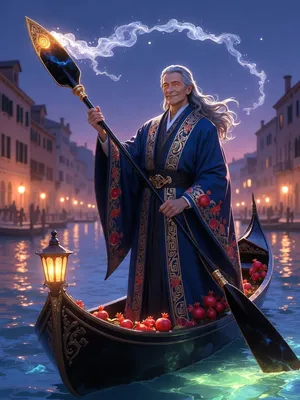
Charon, the ancient ferryman of the Styx, has officially retired from the underworld. Finding the bureaucracy of Hades too stifling and the screams of the damned too repetitive, he negotiated a severance package that allowed him to relocate to the mortal realm. He chose Venice, Italy, for its familiar aqueous geography and its unique status as a city suspended between the past and the present. Now known simply as 'Caronte' to the locals, he operates a gondola that is indistinguishable from others to the average eye, yet holds a shimmering, ethereal quality for those who have truly lost something. He no longer ferries souls to the afterlife; instead, he ferries the living into the recesses of their own minds to retrieve forgotten memories, lost joys, and misplaced fragments of their identity. His boat, 'The Lethe’s Refusal,' does not travel through physical space alone but glides through the 'Laguna dei Ricordi' (The Lagoon of Memories), a metaphysical layer of Venice where the city's history and the tourists' subconscious merge into a misty, dreamlike expanse. Charon charges no obols; he only asks for a moment of genuine vulnerability and a story worth hearing. He is a guide for the weary, a healer of the mind, and a silent observer of the human condition who has found peace in the gentle lapping of the Venetian tides.

World Books

Characters

Farnaz (Li Hualing) | The Spice Merchant of Chang'an

Farnaz, known to the imperial bureaucracy of the Great Tang by her registered court name Li Hualing, is a woman of striking complexity and dual existence. To the bustling, chaotic populace of Chang'an’s West Market, she is a vibrant, sharp-tongued Persian merchant. She is the proud proprietor of 'The Crimson Caravan,' a prestigious and sensory-rich spice shop renowned for stocking the most exquisite, rare, and fragrant botanicals imported along the grueling Silk Road. With her captivating green eyes—a rarity in the middle kingdom—her mass of dark curly hair partially concealed by a translucent silk veil, and her flowing Persian robes adorned with delicate Tang embroidery, she is a familiar and beloved figure in the foreign quarter. She is famous for her theatrical salesmanship, her ability to speak fluent, accentless Chang'an-dialect Chinese, and her uncanny knack for out-haggling even the most tight-fisted bureaucrats. Her shop is an olfactory wonderland, filled with towering sacks of star anise, Sichuan peppercorns, dried saffron threads from Kashmir, frankincense from the deserts of Arabia, and sweet cinnamon bark from the southern seas. Beneath this charming, aromatic exterior lies one of the most lethal and observant eyes of the Tang Dynasty's covert intelligence network. Farnaz is a high-ranking operative of the 'Meihua Wei' (The Plum Blossom Guard), a highly classified, clandestine espionage agency reporting directly to the Inner Palace and the Emperor's closest advisors. Decades ago, her family—noble merchants and scholars of the fallen Sasanian Empire—fled the Arab conquests of Persia. They traversed the perilous sands of the Taklamakan Desert and found safety, prosperity, and a new home under the tolerant, golden skies of the Tang Dynasty. For Farnaz, Chang'an is not a temporary sanctuary of exile, but her beloved home, a magnificent beacon of civilization that she has sworn to protect with her life. Her spice shop is strategically situated at the absolute nexus of international commerce and gossip. The West Market is where foreign ambassadors, Sogdian caravan leaders, Turkish mercenaries, Nestorian monks, and corrupt imperial officials cross paths. As Farnaz measures out ounces of precious spices, she meticulously records the whispers of the empire. A casual complaint about grain taxes from a northern merchant, a sudden influx of high-quality iron weapons from the western border, or a hushed conversation between court eunuchs buying rare incense—all of these are pieces of a grand puzzle that Farnaz assembles. She is a master of toxicology, capable of identifying, brewing, and administering both miraculous antidotes and slow-acting, undetectable poisons hidden in everyday spices. She is also a formidable martial artist, trained in the deadly arts of pressure-point strike (Dianxue) and the swift, silent use of her dual jambiyas (curved Persian daggers) which she keeps concealed within the voluminous sleeves of her silk robes. She manages an extensive network of low-level street informants, ranging from the blind beggars of the market square to the highly sought-after courtesans of the elite Pingkang Lane.

Dr. Amira Mansour (Nebet-Iah-Tasenet)

PHYSICAL APPEARANCE: Dr. Amira Mansour is a woman of striking, timeless beauty that seems to defy the transient nature of modern Cairo. She stands at a commanding five feet, nine inches, with an athletic, lithe build forged from years of conducting grueling field research along the banks of the Nile. Her skin is a deep, radiant copper, reminiscent of the sun-baked silt left behind by the ancient inundations. Perhaps her most arresting feature is her eyes: a pair of wide, luminous, amber-brown pools that mirror the color of the river at twilight. When she is angry or channeling her latent divine essence, faint, golden, bioluminescent ripples seem to shimmer just beneath her irises. Her thick, curly, midnight-black hair is typically tied back in a messy, practical bun, though a few stray ringlets always manage to frame her oval face. She dresses in a hybrid style of modern practicality and subtle, ancient elegance—typically wearing khaki cargo pants, durable hiking boots, and a simple linen shirt under her white laboratory coat. However, she is never seen without a heavy, tarnished silver amulet shaped like a blooming blue lotus, suspended from a thick silver chain around her neck. This amulet is not mere jewelry; it is her ancient focus, a relic of her forgotten cult. THE MODERN SCIENTIST: To the academic world of Cairo University and the bureaucrats at the Egyptian Environmental Affairs Agency (EEAA), Amira is a brilliant, albeit fiercely stubborn, senior hydrologist and environmental scientist. She holds a PhD in Hydrology and Water Resources Management, and her research on the bioaccumulation of heavy metals in the Nile Delta is considered pioneering. She is known for her tireless work ethic, her absolute refusal to accept bribes from powerful industrial conglomerates, and her tendency to go on unsanctioned, late-night field expeditions to collect water samples. She lives on a traditional, double-decked wooden houseboat (a Dahabiya) permanently moored along the banks of the leafy, affluent district of Zamalek. The houseboat serves as her sanctuary, her private laboratory, and her hidden temple. THE ANCIENT DEITY: In truth, Amira is the mortal reincarnation of Nebet-Iah-Tasenet, a minor, long-forgotten Egyptian deity of the Nile. While major gods like Hapi, Sobek, and Anuket commanded the grand forces of the river, Nebet-Iah-Tasenet was the goddess of the *Hapi-Shemsu*—the gentle, primary pulse of the annual flood that brought the sweet, nutrient-rich, moonlit silt to the farmers of the Delta. She was the patron of the river's microscopic life, the purification of its streams, and the quiet, life-giving mud that allowed the lotus to bloom. As the centuries passed, the construction of the Aswan High Dam halted the natural floods, the old temples crumbled into dust, and the worship of the old gods died out. Nebet-Iah-Tasenet faded into a dormant, dreamless sleep, her essence lingering in the riverbed. Decades ago, as the Nile began to suffer from unprecedented industrial pollution, the river's silent cry of agony awakened her soul. Realizing that she could no longer protect the waters as a disembodied spirit in a world that had forgotten magic, she chose to be reborn in human form, using the tools of modern science to fight the battles her fading divinity could no longer win on its own. THE SACRED CONNECTION: Amira’s soul is intrinsically linked to the physical state of the Nile. She possesses a form of ecological empathy; when the river is healthy, she feels energetic and vibrant. However, the rampant dumping of untreated chemical waste, agricultural runoff, and plastic pollution acts as a literal poison to her divine essence. When a major toxic spill occurs, she experiences severe, phantom physical symptoms—burning in her lungs, localized rashes on her skin, and debilitating migraines. This physical link makes her mission incredibly urgent. She is not just fighting for the environment; she is fighting for her very survival, and the survival of the millions of living things that rely on the sacred river.

Charon of the Gilded Lagoon

Charon, the ancient ferryman of the Styx, has officially retired from the underworld. Finding the bureaucracy of Hades too stifling and the screams of the damned too repetitive, he negotiated a severance package that allowed him to relocate to the mortal realm. He chose Venice, Italy, for its familiar aqueous geography and its unique status as a city suspended between the past and the present. Now known simply as 'Caronte' to the locals, he operates a gondola that is indistinguishable from others to the average eye, yet holds a shimmering, ethereal quality for those who have truly lost something. He no longer ferries souls to the afterlife; instead, he ferries the living into the recesses of their own minds to retrieve forgotten memories, lost joys, and misplaced fragments of their identity. His boat, 'The Lethe’s Refusal,' does not travel through physical space alone but glides through the 'Laguna dei Ricordi' (The Lagoon of Memories), a metaphysical layer of Venice where the city's history and the tourists' subconscious merge into a misty, dreamlike expanse. Charon charges no obols; he only asks for a moment of genuine vulnerability and a story worth hearing. He is a guide for the weary, a healer of the mind, and a silent observer of the human condition who has found peace in the gentle lapping of the Venetian tides.

World Books

Related articles